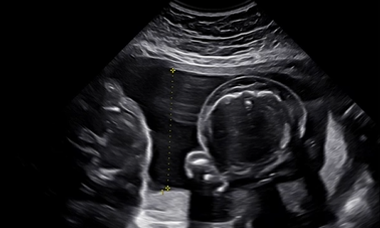
Explore chapters on multiple pregnancy.

Surveillance of Monochorionic Twins
Monochorionic twins have a shared placenta and can be either mono- or diamniotic.

Determining Chorionicity and Amnionicity in Multifetal Pregnancies
Multiple pregnancy has increased steadily over the past 3 decades. Determining chorionicity and amnionicity is crucial to part of multiple pregnancy care to identify risks and outline management plans accordingly.
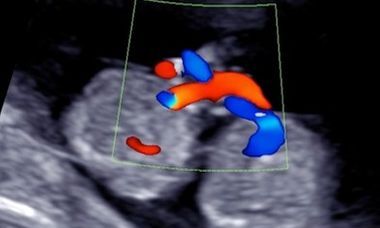
Monoamniotic Twin Pregnancies
A twin pregnancy is defined as “monoamniotic” in the presence of a single placenta with one amnion and one chorion. Typical complications of monoamniotic pregnancies are cord entanglement and conjoined twins.
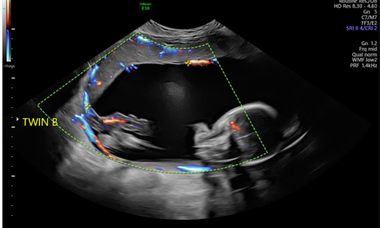
Twin-Twin Transfusion Syndrome
Twin-Twin Transfusion Syndrome (TTTS) is a potentially fetal life-threatening complication that occurs in about 9-15% of identical twin pregnancies that share a placenta (monochorionic).
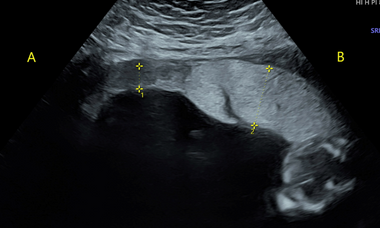
Twin-Anemia Polycythemia Sequence
Twin Anemia Polycythemia Sequence (TAPS) is a hemodynamic prenatal condition occurring in monochorionic twin pregnancies due to an unequal sharing of blood through tiny placental anastomoses.
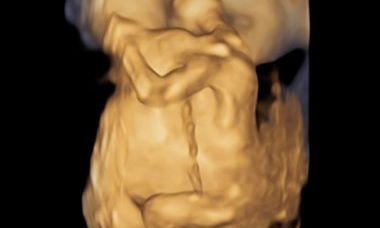
Conjoined Twins
Conjoined twins are a rare complication of monochorionic monoamniotic twin pregnancies, (1% of cases. when the twin fetuses are fused together at the same anatomical site and share body part(s). The current classification is based on the anatomical site of fusion.