
Explore chapters on echogenic bowel, fetal cholelithiasis (fetal gallstones), and hepatic calcifications, meconium peritonitis and meconium pseudocyst
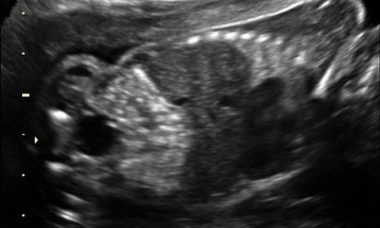
Echogenic Bowel
Fetal echogenic bowel is an ultrasound finding where the bowel shows an increased brightness and is comparable to that of bone. It is often referred to as a “soft marker” that can be associated with aneuploidy, congenital infection, intraamniotic bleeding, cystic fibrosis, and other bowel pathology.
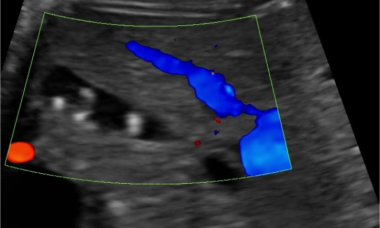
Fetal cholelithiasis (Fetal gallstones)
Fetal cholelithiasis or gallstones are echogenic foci noted within the lumen of the fetal gallbladder on ultrasound. The incidence is 0.07-1.15% and they do not appear to be strongly associated with other fetal anomalies. Fetal cholelithiasis is generally asymptomatic and self-limiting.
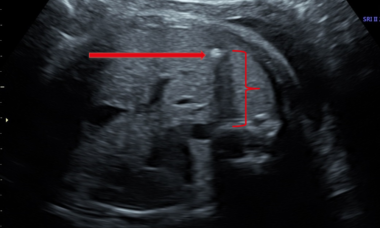
Hepatic Calcifications
Hepatic calcifications are small, punctate areas of abnormal brightness visualized within the fetal liver. Often, these areas appear to have similar echogenicity to surrounding bone and typically produce acoustic shadowing distally. The estimated incidence of hepatic calcifications is 1 in 1750.
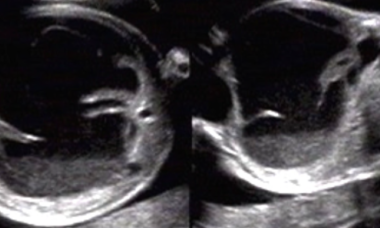
Meconium Peritonitis
Fetal meconium peritonitis (MP) is a sterile chemical peritonitis resulting from extrusion of bowel content into the abdominal cavity through a bowel perforation. The perforation may represent a common end result of various bowel pathologies (i.e. complex MP), or an isolated event (i.e. simple MP).
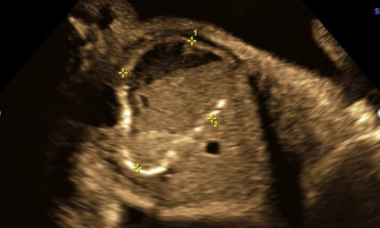
Meconium Pseudocyst
A meconium pseudocyst presents as a complication of meconium peritonitis in which meconium-filled bowel dilates to form a mass proximal to a site of intestinal obstruction or between atretic or stenotic small bowel segments. Meconium pseudocyst is differentiated from cystic type meconium peritonitis by a continuous smooth muscle layer between the cyst and the normal intestine with loss of the mucosal epithelium, as well as by communication between the cyst and the proximal dilated bowel.