
Explore chapters on Saccrococcygeal teratoma, Fetus-in-fetu, Intraabdominal Bronchopulmonary Sequestration, Congenital Neuroblastoma, Hepatic Hemangioma, and Adrenal hemorrhage.
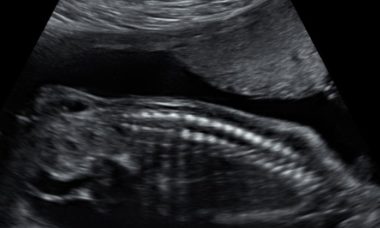
Sacrococcygeal Teratoma
Sacrococcygeal teratoma is a rare tumor probably developing from the pluripotent cells of Hensen’s node, anteriorly to the coccyx. It may be visible on ultrasound as early as in the first trimester as a fairly large mass arising from the sacrococcygeal area, with or without a visible intrapelvic component.
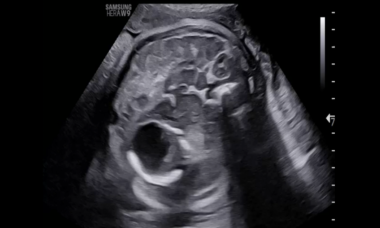
Fetus in Fetu
Fetus-in-fetu (FIF) is an extremely rare anomaly of monochorionic diamniotic twins in which a malformed fetus resides in the body of its normal sibling during development.
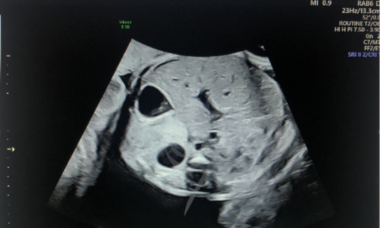
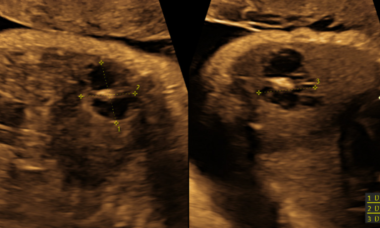
Hepatic Hemangioma
Hepatic hemangiomas are benign vascular tumors. They are rare findings on prenatal ultrasound and are usually first identified in the third trimester as a large heterogeneous mass in the liver.
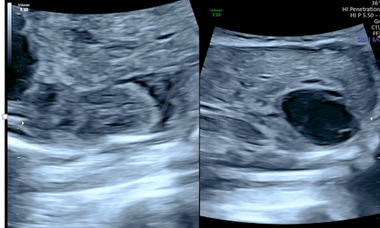
Congenital Neuroblastoma
Neuroblastoma is a cancer which develops from immature nerve cells (neuroblasts) in the sympathetic nervous system and is found in several areas of the body. The term neuro refers to nerves, while blastoma refers to a cancer that starts in immature or developing cells.
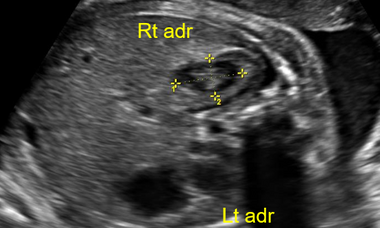
Adrenal Hemorrhage
Adrenal hemorrhage is a relatively uncommon prenatal finding which is typically an incidental finding when ultrasound is performed in late pregnancy for other reasons.