
Explore chapters on Omphalocele, Gastroschisis, Bladder exstrophy, Cloacal Exstrophy and Limb Body Wall Complex.
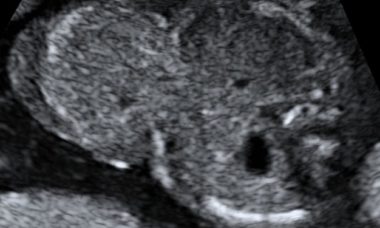
Omphalocele
An omphalocele is a congenital abdominal wall defect characterized by herniation of the abdominal viscera through the abdominal wall at the umbilicus covered by a membrane rather than by skin. The umbilical cord inserts into the mass and the umbilical vessels drape over the surface of the mass.
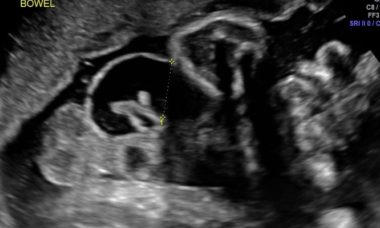
Gastrochisis
Gastrochisis results from a defect in the fetal abdominal wall to the right of umbilical cord insertion site which allows the intestines and sometimes the stomach to float freely in the abdominal cavity.
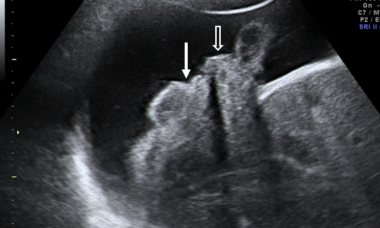
Bladder Exstrophy
Bladder exstrophy (BE) is a rare congenital anomaly caused by failure of the lower abdominal wall and bladder to close during fetal development. This leads to eversion of the bladder structures and portions of the urethra through a midline defect of the anterior abdominal wall.
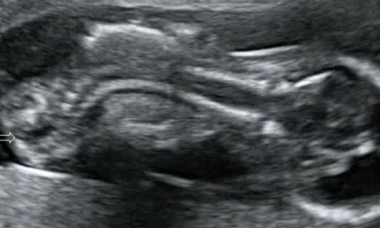
Cloacal Exstrophy
Cloacal exstrophy is a rare congenital disorder related to the abnormal development of the cloacal membrane resulting in an abdominal wall defect and failed closure of the lower urinary tract. Though it is part of the omphalocele, exstrophy, imperforate anus and spinal defect (OEIS) complex, cloacal exstrophy is not always associated these anomalies.
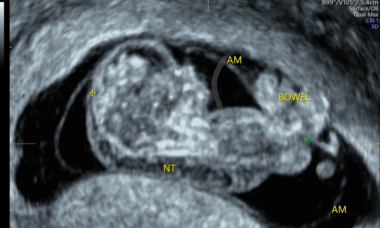
Limb body wall complex
Limb-body wall complex (LBWC) is a complex anomaly of the body wall with associated limb and visceral abnormalities.