
This course provides ultrasound practitioners with an in-depth understanding of pelvic floor anatomy and function, exploring the use of 2D, 3D and 4D ultrasound imaging in the assessment and management of urogynecologic disorders. Discover how dynamic, non-invasive and high-resolution ultrasound can support the evaluation of pelvic floor anatomy and function.
Overview
Course name: ATC9 Pelvic Floor
Duration of course: 6 hours (+ supplementary materials)
Length of access for each course: 12 months
Certificates: 6 CME credits and ISUOG Certificate of Completion
Access: Online learning, learn at your own pace.
Education level: Advanced
Program language: English
Suitable for: Practicing gynecologists, trainees, fellows, residents, radiographers, sonographers, GPs and healthcare professionals providing antenatal care and performing ultrasound scans.
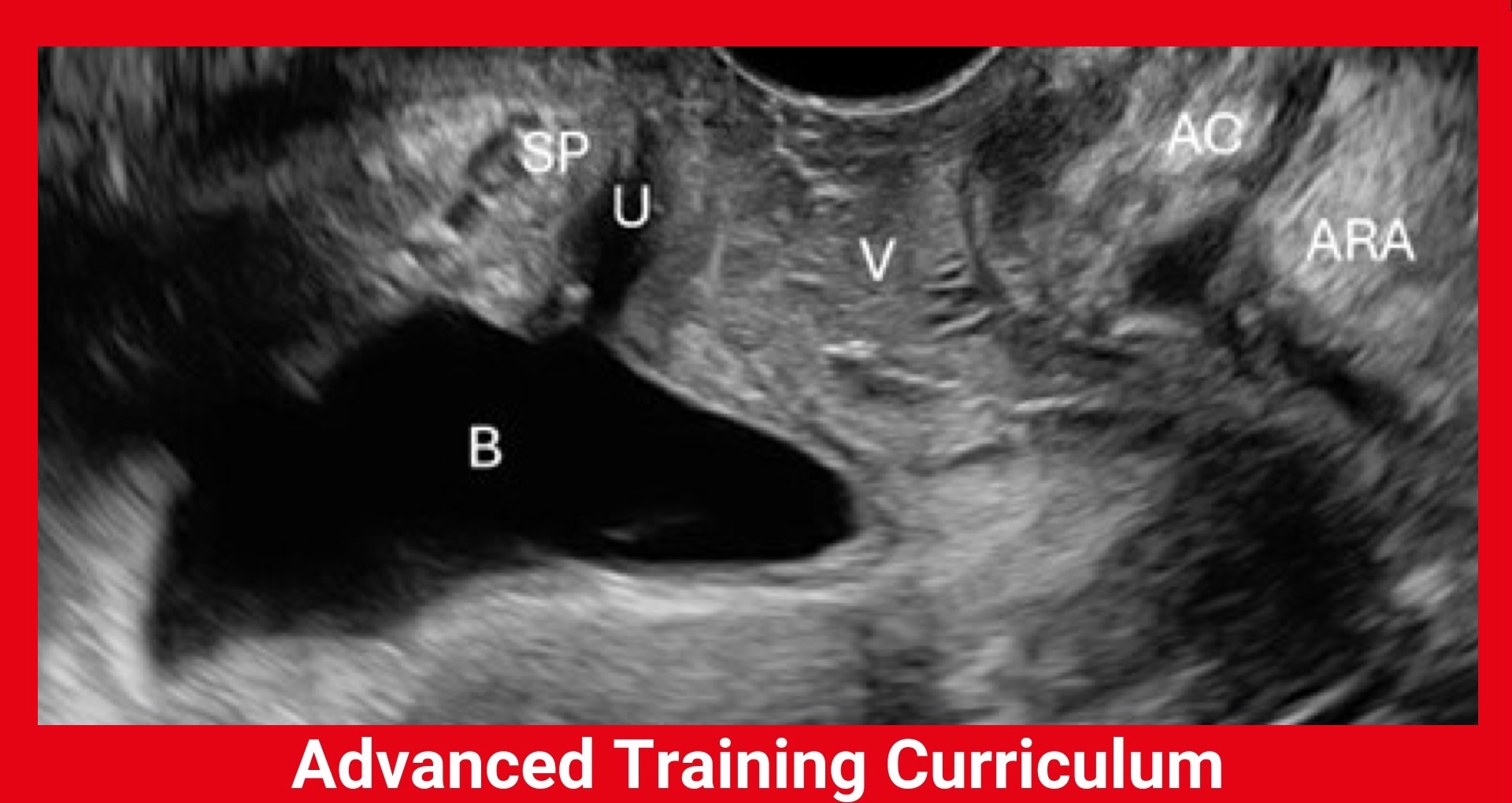
Why do this course?
Develop your expertise in pelvic floor ultrasound and learn how 2D, 3D and 4D imaging can enhance the assessment of pelvic anatomy and function. Build a deeper understanding of pelvic floor anatomy and develop techniques for assessing the anterior, middle and posterior compartments, including the levator ani complex and anal sphincter before and after childbirth. Explore the assessment of pelvic organ prolapse and the visualisation of synthetic implants, including slings, tapes and bulking agents, while gaining the knowledge and skills to apply advanced ultrasound techniques in the assessment and management of urogynecological disorders. Ultimately, strengthen your clinical knowledge and confidence and learn how to integrate pelvic floor ultrasound into routine clinical practice.
Course description
Pelvic floor ultrasound has become the preferred imaging modality for evaluating pelvic anatomy and function due to its dynamic, non-invasive, and high-resolution capabilities. This course is designed to provide ultrasound practioners with an in-depth understanding of pelvic floor anatomy, emphasizing the role of 2D, 3D, and 4D ultrasound imaging in the assessment and management of urogynecologic disorders. Learners will explore a range of imaging techniques tailored to the evaluation of the anterior, middle, and posterior compartments, including the detailed assessment of the levator ani complex and anal sphincter before and after childbirth. The curriculum also covers advanced topics such as the visualization of synthetic implants (e.g. slings, tapes, and bulking agents) used in the treatment of urinary incontinence, as well as the assessment of pelvic organ prolapse. Through a structured and clinically focused approach, this course aims to equip practitioners with the skills necessary to integrate pelvic floor ultrasound into routine urogynecologic care.
Contributors to this course
Course contributors: Cristina Ros, Anna Carmona Ruiz, Gabor Szabo, Lina Youssef, Daniela Fischerová
Course materials: Riffat Cheema, Cristina Ros, Anna Carmona Ruiz, Ingrid Volløyhaug, Vered Eisenberg, Clara Shek, John De Lancey, Ali Youssef, Ligita Jokubkiene, Hans Dietz
Learning objectives
- Understand why ultrasound is the preferred imaging modality for examining pelvic floor anatomy.
- Investigate the different techniques and approaches of ultrasound imaging and their utility in urogynecologic diseases.
- Apply 2D, 3D and 4D ultrasound in the diagnosis and management of pelvic floor disorders/ urogynecology.
- Evaluate the anterior, middle and posterior compartment using ultrasound.
- Compare the appearance of pelvic floor anatomy such as the levator ani and anal sphincter before and after delivery.
- Recognize the ultrasound appearance of synthetic implants (tapes and bulking agents) and appreciate their role in treating urinary incontinence.
- Assess pelvic organ prolapse using ultrasound.
- Recognize and classify sonographic features of OASIS.
Key questions
- Why is ultrasound considered the imaging modality of choice for evaluating pelvic floor anatomy?
- What are the anatomical landmarks used to assess the anterior, middle, and posterior compartments of the pelvic floor?
- What is the role of ultrasound in diagnosing levator ani avulsion, and which imaging planes are most reliable?
- What criteria are used to diagnose pelvic organ prolapse sonographically, and how do these correlate with clinical staging systems?
- What sonographic features indicate the presence of synthetic implants such as mid-urethral slings or bulking agents, and how should these be evaluated?
- How can ultrasound be used postoperatively to assess complications such as sling migration, erosion, or residual prolapse?
- How can pelvic floor ultrasound findings guide individualized treatment strategies in urogynecology?
Prices
Prices for ISUOG members
| ISUOG member | £75 |
| ISUOG member - with trainee/sonographer discount * | £40 |
| ISUOG member in middle-income setting | £40 |
| ISUOG member in lower-resource setting | £10 |
* Please note that this discount is NOT applicable to ISUOG members situated in a middle-income or lower-resource setting. We may need to verify your status, which may take some time to review.
Prices for ISUOG non-members*
| Non-member | £85 |
| Non-member in middle-income setting | £50 |
| Non-member in lower-resource setting | £15 |
* Prices for non-members does NOT include ISUOG membership. Join as an ISUOG member first for discounted prices to our online training courses (allow 24 hours for systems to update).
Trainees/residents and sonographers/radiographers
Proof of status: All trainees, residents, sonographers and radiographers will need to submit proof of their trainee, resident, sonographer or radiographer status by way of a letter from their Department or Institution. The letter must be in English and dated within the last 3 months and submitted by email to [email protected] along with the name of the course you wish to purchase.
Sonographer definition: A sonographer is a non-physician medical imaging professional who performs diagnostic medical sonography, or diagnostic ultrasound.
Trainee/resident definition: A trainee is a medical professional who is not yet fully qualified or practicing without supervision within their chosen specialty and in accordance with the relevant national regulatory authorities; a resident is in residency training which leads to specially or subspecialty) certification.
Low resource country discount
ISUOG's mission is to disseminate the highest quality education to the broadest audience. To support this aim, we have ensured that attendees based in, currently residing in, or currently working in low resource countries have the lowest purchase costs. ISUOG's low resource country list can be viewed here https://www.research4life.org/access/eligibility/.
No other discounts can be used in conjunction with this rate. These rates will appear automatically in the ISUOG Academy based on your membership details, or registered details. Please make sure these details are up to date.
Middle income country discount
ISUOG's mission is to disseminate the highest quality education to the broadest audience. To support this aim, we have ensured that attendees based in, currently residing in, or currently working in middle income countries have access to reduced purchase costs. ISUOG has identified the following countries whose economies fall within the middle income category as defined by the World Bank.
The full classification list can be found below
| Argentina | ||||||||
| Belarus | ||||||||
| Brazil | ||||||||
| China | ||||||||
| Costa Rica | ||||||||
| Dominican Republic | ||||||||
| India | ||||||||
| Indonesia | ||||||||
| Iran | ||||||||
Kazakhstan
|
No other discounts can be used in conjunction with this rate. These rates will appear automatically in the ISUOG Academy based on your membership details, or registered details. Please make sure these details are up to date.
Further information
Accreditation and CME Credits
CME credits
The European Accreditation Council (EACCME) accredits this online course for Continuing Medical Education (CME). European CME credits (ECMEC®) will be awarded on successful completion of this course. Through an agreement between the European Union of Medical Specialists (UEMS) and the American Medical Association (AMA), physicians may convert EACCME credits to an equivalent number of AMA PRA Category 1 CreditsTM. Information on the process to convert EACCME credit to AMA credit can be found at www.ama-assn.org/go/internationalcme.
CME Subcommittee
The CME Subcommittee oversees the CME requirements for our CME accredited courses.
Conflict of Interest
No commercial support has been accepted related to the development or publication of this course. This course underwent peer review in line with the standards of editorial integrity and publication ethics maintained by the International Society of Ultrasound in Obstetrics & Gynecology (ISUOG). Conflicts of interest have been identified and resolved in accordance with EACCME guidelines.
You can find out how we adhere to the essential criteria for EACCME accreditation requirements here.
Technical requirements
You can study on your phone, tablet or laptop. To participate and access this activity you will need a good internet connection and an up to date browser:
- MS Internet Explorer 11 (Not including compatibility modes)
- MS Edge
- Mozilla Firefox version 60 Extended Support Release (ESR)
- Google Chrome 73
- Safari 10 auf OS X
- Mobile Browser Android >4 and iOS > 9
- Current versions of Adobe Reader plugin
Terms and Conditions
You can find our full Terms and Conditions, and Privacy Policy here.
You can find our Refund Policy here.
You must be an ISUOG member to get a discounted price and additional resources; or simply subscribe to our newsletter to access the Basic Training Online Program at the non-member price.
Please note: You will get a receipt from the online shop after purchase which can be used for your accounts and expenses, we do not offer additional invoices for ecommerce products.
Advanced curriculum course list
Gynecological complications
Other gynecological complication courses in this series:
- ATC9 Ultrasound findings of Endometriosis
- ATC9 Gyncological emergencies
- ATC9 Invasive procedures: Gynecology