
This course strengthens transvaginal ultrasound skills for diagnosing and preoperatively assessing endometriosis using the IDEA consensus. A standardized, stepwise approach improves detection and reproducibility, highlighting key markers like the sliding sign and pouch of Douglas obliteration. Detailed evaluation of the rectosigmoid, uterosacral ligaments, bladder, and ureters is covered, and findings are linked to surgical complexity, multidisciplinary planning, and patient counselling.
Overview
Course name: ATC9 Ultrasound findings of Endometriosis
Duration of course: 7 hours (+ supplementary materials)
Length of access for each course: 12 months
Certificates: 7 CME credits and ISUOG Certificate of Completion
Access: Online learning, learn at your own pace.
Education level: Advanced
Program language: English
Suitable for: Practicing gynecologists, trainees, fellows, residents, nurses, radiographers, sonographers, GPs and healthcare professionals performing ultrasound scans.
Why do this course?
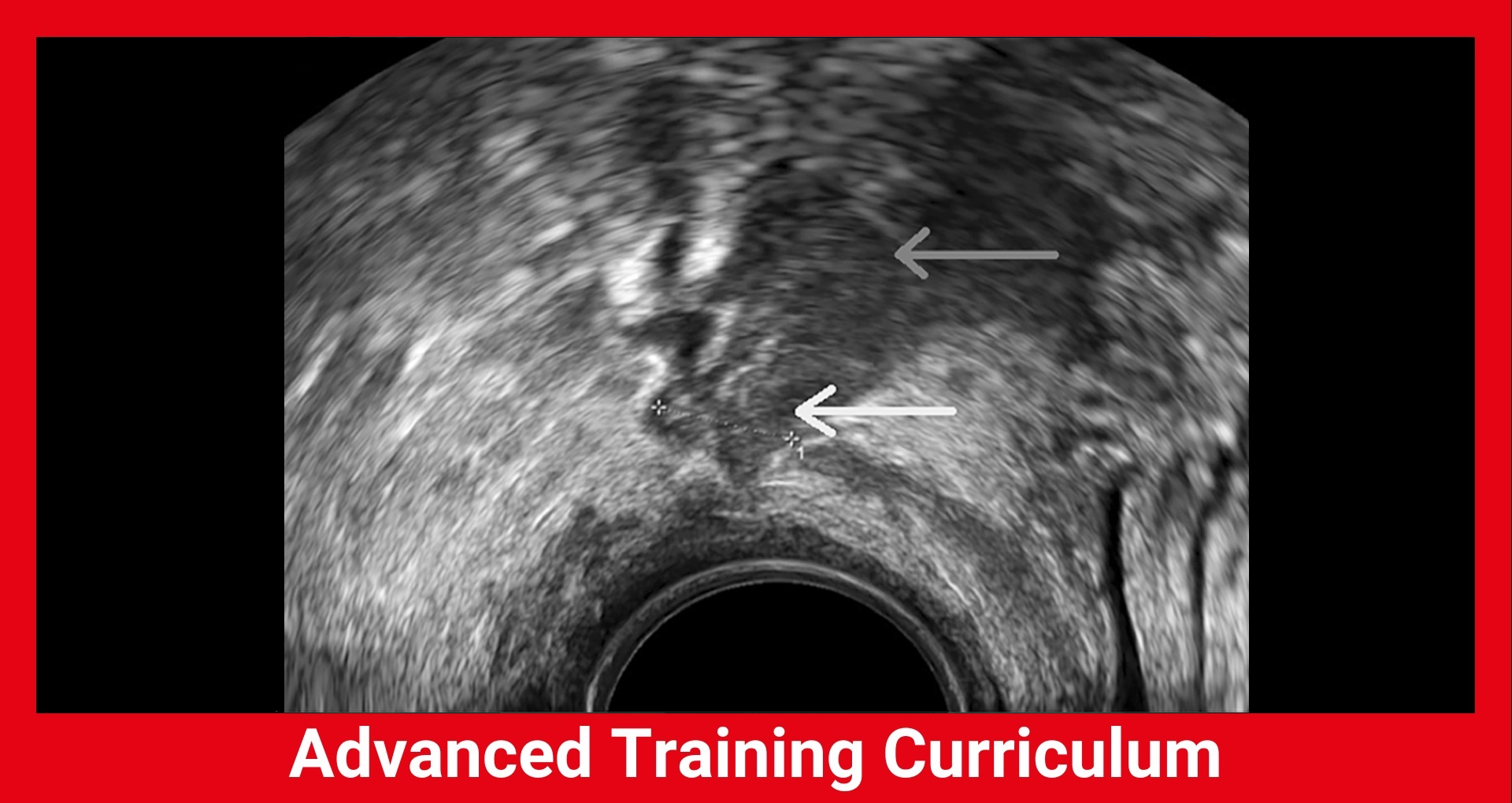
This course is essential for practitioners who want to improve their diagnostic accuracy and confidence in assessing endometriosis using transvaginal ultrasound. By teaching a standardized, stepwise approach based on the IDEA consensus, it shows how consistent imaging techniques can enhance detection of both superficial and deep disease and improve reproducibility. The course also provides practical guidance on key sonographic markers such as the sliding sign and pouch of Douglas obliteration, and detailed assessment of critical areas including the rectosigmoid, uterosacral ligaments, bladder, and ureters. Importantly, it explains how ultrasound findings can predict surgical complexity and support minimally invasive management, enabling better multidisciplinary planning and more informed patient counselling.
Course description
This advanced training course emphasizes transvaginal ultrasound as the first-line, non-invasive imaging modality for the diagnosis and preoperative assessment of endometriosis. It provides a practical overview of the IDEA consensus, demonstrating how a standardized, stepwise ultrasound approach improves detection of superficial and deep disease and enhances reproducibility. Key sonographic markers, including the sliding sign and pouch of Douglas obliteration, along with targeted assessment of the rectosigmoid, uterosacral ligaments, bladder and ureters are detailed. Finally, this course highlights how ultrasound findings predict surgical complexity and guide minimally invasive management, supporting multidisciplinary planning and informed patient counselling.
Contributors to this course
Course contributors: Gábor Szabó, Divya Singh
Course materials: Matthew Leonardi, George Condous, Tina Tellum, Gábor Szabó, Maya Sibal, Davor Jurkovic, Mohamed Mabrouk, Lil Valentin, Antonia Testa, Stefano Guerriero, Carla Tomassetti
Learning objectives
- Illustrate the importance of transvaginal ultrasound as the first line imaging modality in the diagnosis of pelvic endometriosis
- Provide a comprehensive overview on The Consensus Statement of the International Deep Endometriosis Analysis (IDEA) for sonographic detection of endometriosis
- Highlight the role of ultrasound examination in predicting the complexity of laparoscopic surgery in endometriosis
- Detect ultrasound signs of superficial and deep endometriosis
- Use each step of the IDEA approach
- Understand the minimally invasive gynecologic surgical techniques used in the treatment of deep endometriosis
Key questions
- What steps are used in the IDEA approach?
- Which soft markers are useful in the diagnosis of rectosigmoid deep endometriosis?
- How are the uterosacral ligaments visualized using ultrasound?
- Which part of the bladder is most affected by deep endometriosis?
- What are the signs of suspected superficial endometriosis?
- How is pouch of Douglas (POD) obliteration detected?
- What is the difference between extrinsic and intrinsic deep endometriosis of the ureter?
Prices
Prices for ISUOG members
| ISUOG member | £75 |
| ISUOG member - with trainee/sonographer discount * | £40 |
| ISUOG member in middle-income setting | £40 |
| ISUOG member in lower-resource setting | £10 |
* Please note that this discount is NOT applicable to ISUOG members situated in a middle-income or lower-resource setting. We may need to verify your status, which may take some time to review.
Prices for ISUOG non-members*
| Non-member | £85 |
| Non-member in middle-income setting | £50 |
| Non-member in lower-resource setting | £15 |
* Prices for non-members does NOT include ISUOG membership. Join as an ISUOG member first for discounted prices to our online training courses (allow 24 hours for systems to update).
Trainees/residents and sonographers/radiographers
Proof of status: All trainees, residents, sonographers and radiographers will need to submit proof of their trainee, resident, sonographer or radiographer status by way of a letter from their Department or Institution. The letter must be in English and dated within the last 3 months and submitted by email to [email protected] along with the name of the course you wish to purchase.
Sonographer definition: A sonographer is a non-physician medical imaging professional who performs diagnostic medical sonography, or diagnostic ultrasound.
Trainee/resident definition: A trainee is a medical professional who is not yet fully qualified or practicing without supervision within their chosen specialty and in accordance with the relevant national regulatory authorities; a resident is in residency training which leads to specially or subspecialty) certification.
Low resource country discount
ISUOG's mission is to disseminate the highest quality education to the broadest audience. To support this aim, we have ensured that attendees based in, currently residing in, or currently working in low resource countries have the lowest purchase costs. ISUOG's low resource country list can be viewed here https://www.research4life.org/access/eligibility/.
No other discounts can be used in conjunction with this rate. These rates will appear automatically in the ISUOG Academy based on your membership details, or registered details. Please make sure these details are up to date.
Middle income country discount
ISUOG's mission is to disseminate the highest quality education to the broadest audience. To support this aim, we have ensured that attendees based in, currently residing in, or currently working in middle income countries have access to reduced purchase costs. ISUOG has identified the following countries whose economies fall within the middle income category as defined by the World Bank.
The full classification list can be found below
| Argentina | ||||||||
| Belarus | ||||||||
| Brazil | ||||||||
| China | ||||||||
| Costa Rica | ||||||||
| Dominican Republic | ||||||||
| India | ||||||||
| Indonesia | ||||||||
| Iran | ||||||||
Kazakhstan
|
No other discounts can be used in conjunction with this rate. These rates will appear automatically in the ISUOG Academy based on your membership details, or registered details. Please make sure these details are up to date.
Further information
Accreditation and CME Credits
CME credits
The European Accreditation Council (EACCME) accredits this online course for Continuing Medical Education (CME). European CME credits (ECMEC®) will be awarded on successful completion of this course. Through an agreement between the European Union of Medical Specialists (UEMS) and the American Medical Association (AMA), physicians may convert EACCME credits to an equivalent number of AMA PRA Category 1 CreditsTM. Information on the process to convert EACCME credit to AMA credit can be found at www.ama-assn.org/go/internationalcme.
CME Subcommittee
The CME Subcommittee oversees the CME requirements for our CME accredited courses.
Conflict of Interest
No commercial support has been accepted related to the development or publication of this course. This course underwent peer review in line with the standards of editorial integrity and publication ethics maintained by the International Society of Ultrasound in Obstetrics & Gynecology (ISUOG). Conflicts of interest have been identified and resolved in accordance with EACCME guidelines.
You can find out how we adhere to the essential criteria for EACCME accreditation requirements here.
Technical requirements
You can study on your phone, tablet or laptop. To participate and access this activity you will need a good internet connection and an up to date browser:
- MS Internet Explorer 11 (Not including compatibility modes)
- MS Edge
- Mozilla Firefox version 60 Extended Support Release (ESR)
- Google Chrome 73
- Safari 10 auf OS X
- Mobile Browser Android >4 and iOS > 9
- Current versions of Adobe Reader plugin
Terms and Conditions
You can find our full Terms and Conditions, and Privacy Policy here.
You can find our Refund Policy here.
You must be an ISUOG member to get a discounted price and additional resources; or simply subscribe to our newsletter to access the Basic Training Online Program at the non-member price.
Please note: You will get a receipt from the online shop after purchase which can be used for your accounts and expenses, we do not offer additional invoices for ecommerce products.
Gynecological complications curriculum course list
Other courses in this series that will be available soon:
- ATC9 Chronic and acute pelvic pain
- ATC9 Abnormal uterine bleeding
- ATC9 Pelvic floor
- ATC9 Invasive procedures
- ATC9 Non-gyn pathologies