

Pelvic pain and endometriosis is a key topic at the ISUOG World Congress 2026.
Endometriosis affects an estimated 10% of reproductive-aged women worldwide, which is approximately 190 million individuals, yet it remains one of the most underdiagnosed and undertreated conditions in gynecology. Despite advances in ultrasound imaging, delays to diagnosis persist, ranging from an estimated four to 12 years. With no definitive cure available, improving access to timely diagnosis, standardising imaging and reporting practices, and applying effective, individualised multidisciplinary management strategies remain top global priorities.
Against this complex and challenging landscape, the 36th ISUOG World Congress in London offers a unique opportunity to engage with world-leading researchers and experts in endometriosis and pelvic pain. Attendees will gain insight into the latest advances in ultrasound-based diagnosis, surgical planning, and integration of imaging into multidisciplinary care pathways.
Through cutting-edge research presentations, interactive case-based learning and expert-led debates, the Congress will equip clinicians with the tools to help cut down diagnosis times, refine advanced imaging techniques and use evidence to shape clinical practice in the field of pelvic pain and endometriosis.
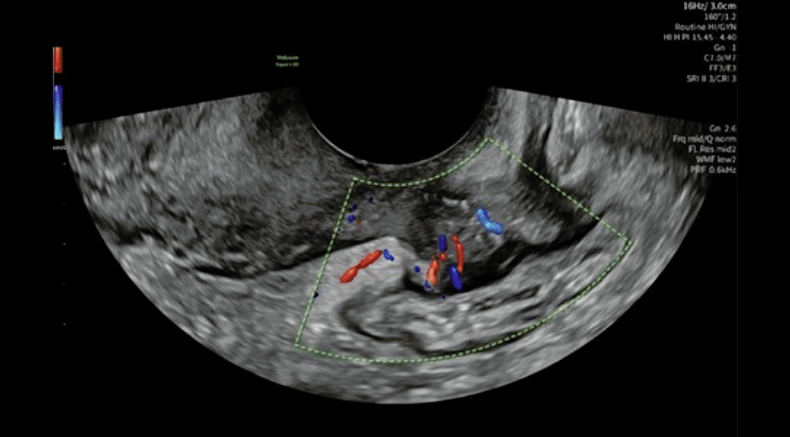
2D transvaginal color Doppler ultrasound imaging in longitudinal view showing marked vascularity of the endometriotic nodule, consistent with pregnancy-related decidualization
Barra, F., Maramai, M., Olcese, F., Beleva, D., Gustavino, C. and Ferrero, S. (2026), Decidualized posterior compartment deep endometriosis: three-dimensional rendering and Doppler-based vascular assessment. Ultrasound Obstet Gynecol. https://doi.org/10.1002/uog.70225
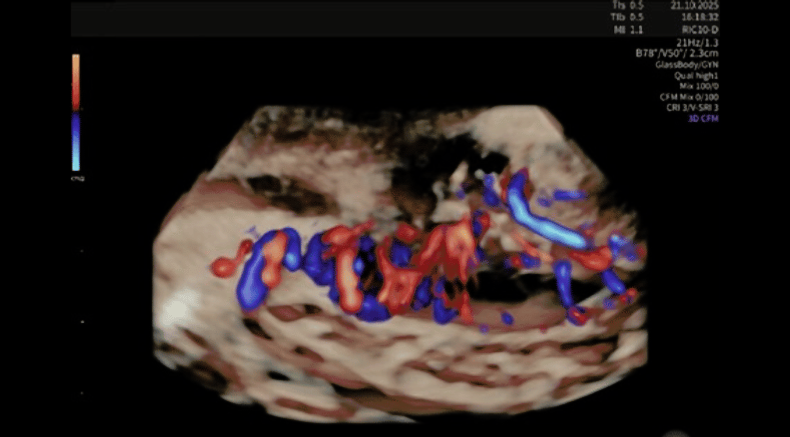
HDlive GlassBody 3D rendering with integrated color Doppler flow mapping, showing hypoechogenic nodule with marked intralesional vascularity
Barra, F., Maramai, M., Olcese, F., Beleva, D., Gustavino, C. and Ferrero, S. (2026), Decidualized posterior compartment deep endometriosis: three-dimensional rendering and Doppler-based vascular assessment. Ultrasound Obstet Gynecol. https://doi.org/10.1002/uog.70225
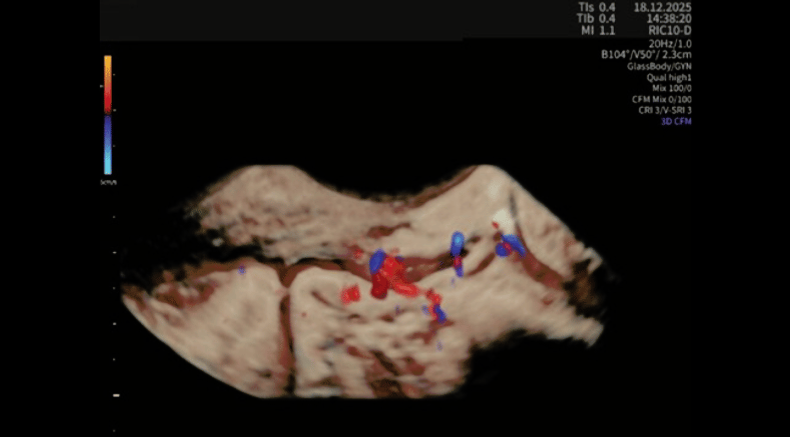
HDlive GlassBody rendering with integrated color Doppler flow mapping, demonstrating a marked reduction in intralesional vascularity compared with the baseline examination
Barra, F., Maramai, M., Olcese, F., Beleva, D., Gustavino, C. and Ferrero, S. (2026), Decidualized posterior compartment deep endometriosis: three-dimensional rendering and Doppler-based vascular assessment. Ultrasound Obstet Gynecol. https://doi.org/10.1002/uog.70225
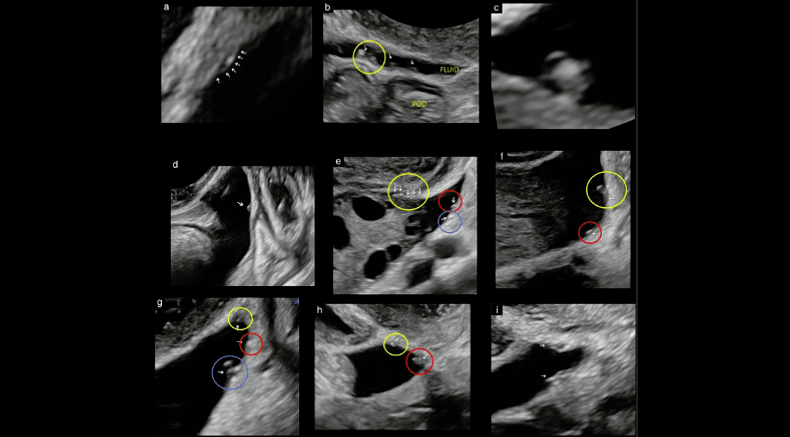
Examples of the ultrasound appearance of superficial endometriosis
Guerriero, S., Condous, G., Rolla, M., Pedrassani, M., Leonardi, M., Hudelist, G., Ferrero, S., Alcazar, J.L., Ajossa, S., Bafort, C., Van Schoubroeck, D., Bourne, T., Van den Bosch, T., Singh, S.S., Abrao, M.S., Di Giovanni, A., Tomassetti, C. and Timmerman, D. (2025), Addendum to consensus opinion
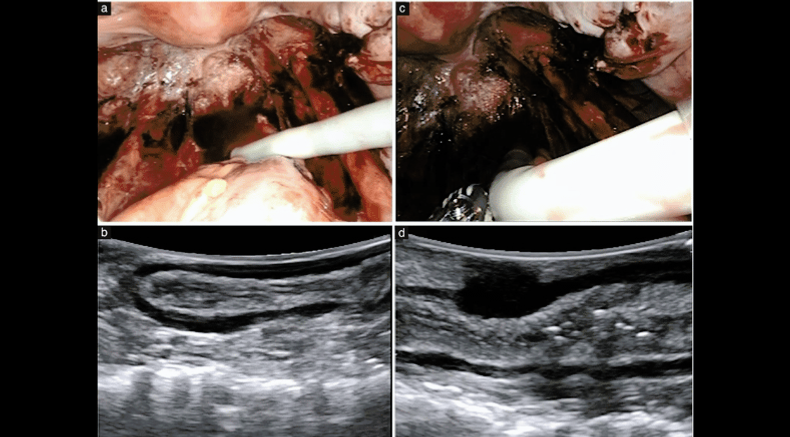
Laparoscopic views (a,c) and intraoperative ultrasound (IO-US) images (b,d) during robot-assisted laparoscopy
Nigdelis, M.P., Hudelist, G., Keckstein, J., Solomayer, E.-.-F., Daniilidis, A., Krentel, H. and Constantin, A.-.-S. (2025), Intraoperative ultrasound in minimally invasive surgery for deep endometriosis: time for new approaches. Ultrasound Obstet Gynecol, 65: 676-681. https://doi.org/10.1002/uog.29
Why is pelvic pain and endometriosis a key topic at ISUOG 2026?
Sessions where you can learn more about this topic at ISUOG 2026 World Congress
Supplement your learning before Congress
Recent UOG articles
- Decidualized posterior compartment deep endometriosis: three-dimensional rendering and Doppler-based vascular assessment - F. Barra, M. Maramai, F. Olcese, D. Beleva, C. Gustavino, S. Ferrero. First published: 26 April 2026
- Diagnostic test accuracy of each of the four IDEA ultrasound steps in predicting presence of deep endometriosis - P. McClenahan, J. Mak, C. Uzuner, M. Espada Vaquero, S. Reid, A. Eathorne, G. Condous, IDEA Group Collaborators. First published: 01 April 2026
- Impact of deep or ovarian endometriosis on pelvic pain and quality of life: prospective cross-sectional ultrasound study - P. Chaggar, T. Tellum, N. Thanatsis, L. V. de Braud, T. Setty, D. Jurkovic First Published: 14 January 2025
- Addendum to consensus opinion from the International Deep Endometriosis Analysis (IDEA) group: sonographic evaluation of superficial endometriosis - S. Guerriero, G. Condous, M. Rolla, M. Pedrassani, M. Leonardi, G. Hudelist, S. Ferrero, J. L. Alcazar, S. Ajossa, C. Bafort, D. Van Schoubroeck, T. Bourne, T. Van den Bosch, S. S. Singh, M. S. Abrao, A. Di Giovanni, C. Tomassetti, D. Timmerman
First published: 09 July 2025 - Clinical utility of ultrasonography in pediatric and adolescent gynecology: retrospective review of 1313 ultrasound examinations - N. Cooper, H. Meehan, K. Linton-Reid, J. Barcroft, J. Danin, M. Seah, S. Sadigh, N. Bharwani, S. Sur, C. Fotopoulou, C. Landolfo, J. Yazbek, S. Saso, D. Timmerman, T. Bourne, M. Al-Memar. First published: 02 February 2025
- Transvaginal ultrasound for detecting parametrial involvement in suspected deep pelvic endometriosis: updated meta-analysis - J. L. Alcázar, C. Montoya, C. Candau, C. Catalan, R. Orozco, M. Á. Pascual, S. Ajossa, S. Guerriero. First published: 23 August 2025
UOG videos


ISUOG Consensus Statement on sonographic assessment of the endometrium: how to perform a gynecological ultrasound scan and report the findings
Proposed simplified protocol for initial assessment of endometriosis with transvaginal ultrasound

Prediction of vesicouterine adhesions by transvaginal sonographic sliding sign technique: validation study

Dynamic transvaginal ultrasound examination for assessing anatomy of parametrium
Lectures
The patient presenting with acute pelvic pain: Help, a hemoperitoneum!
S. Bobdiwala 2025
What is required to run a pelvic pain clinic
M. Leonardi 2025
Getting the diagnosis right and optimizing endometriosis surgical management
G. Condous 2025

Endometriosis: case examples for discussion with the audience
T. Tellum 2023
ISUOG Consensus Statements
VISUOG
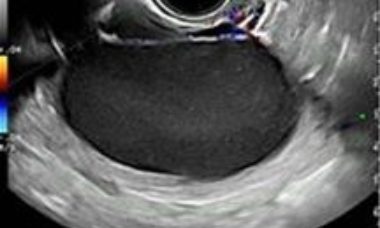
Endometriomas
Endometriosis is a benign estrogen dependent disease that is defined by the presence of endometrial glandular tissue outside of the uterus. It is most often localised in the ovary giving rise to a clear demarcated ovarian cyst, containing altered blood: the endometrioma.
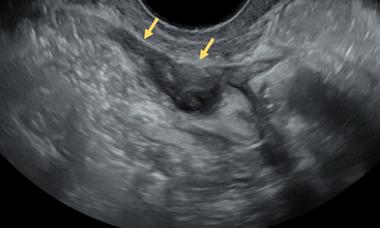
Extrapelvic sites of Endometriosis
Extrapelvic endometriosis most often affects the gastrointestinal tract, umbilicus, inguinal area, cesarean scar, diaphragm and pelvic nerves. The diagnosis is challenging and imaging methods can be used to access suspected lesions, and to evaluate the pelvic cavity since isolated extraperitoneal endometriosis is rare.
Superficial Endometriosis
Endometriosis is an enigmatic, chronic inflammatory disease of unknown etiology, characterised by ectopic growth of endometrial-like cells outside the uterus.
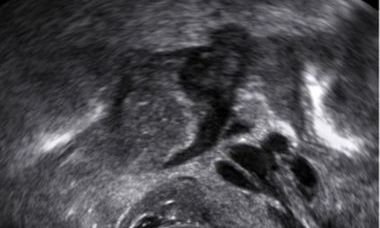
Deep Endometriosis
Explore chapters on deep endometriosis
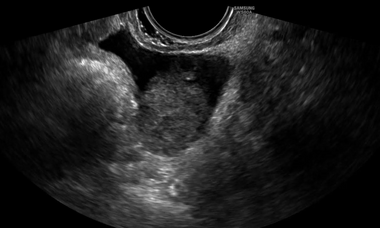
Ovarian torsion and massive ovarian oedema (MOE)
Adnexal torsion consists in the rotation of the adnexal supporting structures around their vascular axis. It is considered an emergency and the typical clinical features are acute pelvic pain, nausea, and vomiting.
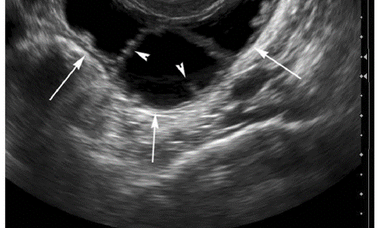
Salpingitis
Salpingitis is defined as an infection and inflammation in the oviducts which act as the site for the transport of ova, sperm, and the site of fertilization and early embryonic development.
Patient information
Gynecological Ultrasound Scan
This leaflet is to help you understand the use, accuracy and timing of pelvic ultrasound scan and what questions you should be asking your caregiver.
Endometriomas
This leaflet is to help you understand what Endometriosis is, how does it happen, what tests you need and what are the long term implications of the diagnosis?
Anterior compartment endometriosis
This leaflet is to help you understand what anterior compartment endometriosis is, what tests you need and the implication of being diagnosed, as well as the treatment options available to you.
Deep Endometriosis
This leaflet is to help you understand what Deep Endometriosis is, what tests you need, and the implication of being diagnosed.
Extra-pelvic endometriosis sites
This leaflet is to help you understand what Endometriosis is, how does it happen, what tests you need and what are the long term implications of the diagnosis?
Bowel Endometriosis
This leaflet is to help you understand what bowel endometriosis is, what tests you need, and what the implication of being diagnosed means to you.
Ovarian Torsion
This leaflet is to help you understand what an Ovarian torsion is, what tests you need and the implication of being diagnosed for you and your baby.
Salpingitis
This leaflet is to help you understand what salpingitis is, what causes it, and what treatments are available to you.
CME activites
- CME Activity: Masterclass: How I Evaluate The Pelvis of Women with Pelvic Pain: Endometriosis, Adenomyosis, IUD location and Other Pathology
- CME Activity: IDEA Consensus for the Classification of Endometriosis
- CME Activity: How Do We Describe Our Ultrasound Findings in Women with Endometriosis? A Consensus Statement
- CME Activity: Workshop: How to Examine the Pelvis of Women with Pelvic Pain: Making Sure You Pick Up Evidence of Endometriosis and Adenomyosis?
Key questions
What are the standardised protocols and ultrasound techniques for detecting and mapping endometriosis across all compartments of the pelvis?
What are the key sonographic markers of endometriosis affecting the bowel, bladder and ureters, and how can these be reliably identified?
How should reports be standardised so that multidisciplinary teams communicate effectively?
What factors contribute to delayed diagnosis, and how can imaging pathways be optimised to reduce diagnostic delay?
How can multidisciplinary collaboration be integrated with imaging findings to improve patient outcomes and long-term disease management?