

Discover the latest research on screening and diagnosis of fetal anomalies: heart at ISUOG 2026.
Affecting eight in 1000 newborns, congenital heart disease is the most prevalent fetal abnormality worldwide. Nearly half of infant mortality is attributable to cardiac defects. Advances in prenatal ultrasound imaging have transformed detection, shifting diagnosis to earlier in the antenatal period, thereby enabling perinatal planning, targeted follow-up, and informed parental counselling. Despite these advances, significant variation persists in the standard of clinical practice. There remains no universal consensus on indications for fetal echocardiography, with marked discrepancies in how risk factors are interpreted and applied. Furthermore, detection rates continue to vary globally, reflecting differences in expertise, training and resource availability.
ISUOG's global awareness initiative, Every Little Heart Matters, has been introduced to help raise awareness of the varying detection rates and clinical standards across the globe, and help provide clear research-driven guidance to clinicians on how to best diagnose fetal heart anomalies. ISUOG strives to help close the gaps in detection rates with the disemination of education, clinical guidelines and resources as Every Little Heart Matters, no matter where it is in the world.
Considering this, the 36th ISUOG World Congress in London will offer a unique opportunity to receive much-needed research updates, hear directly from international experts in ultrasound and fetal cardiology, and explore the controversies shaping current practice. Through cutting-edge sessions and expert-led discussions that span global perspectives, attendees will gain the knowledge and skills required to ensure precise diagnoses, harmonised clinical approaches, and ultimately improved outcomes for infants and their families worldwide.
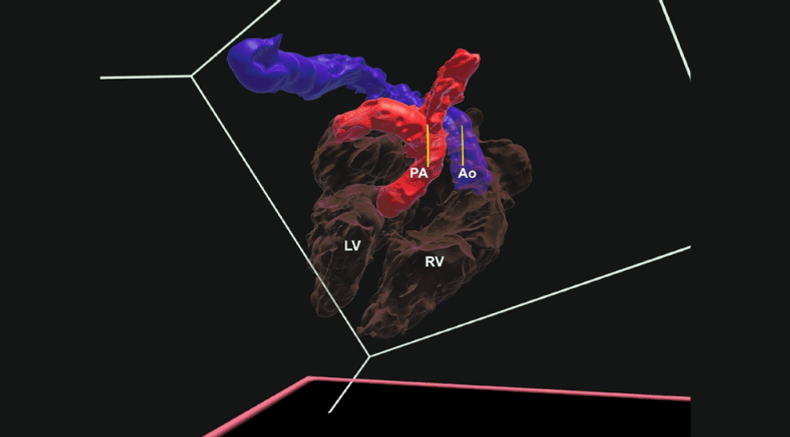
Three-dimensional virtual model of fetal heart showing transposition of the great arteries
Leite, M.d.F.P., Bravo-Valenzuela, N.J., Araujo Júnior, E., Ribeiro, G., Arcoverde, V. and Werner, H. (2025), Transposition of the great arteries: three-dimensional virtual navigation inside the fetal heart. Ultrasound Obstet Gynecol, 66: 669-671. https://doi.org/10.1002/uog.70032
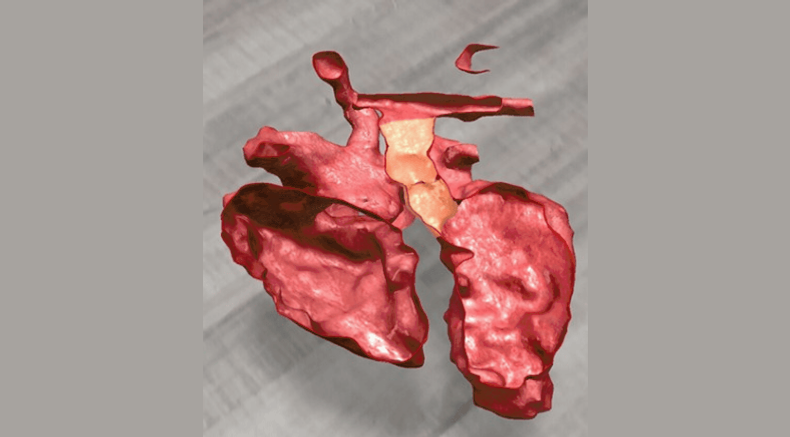
Example model of fetal heart with d-transposition of the great arteries available on Congenital heARts app
Bertelli, F., Guariento, A., Gervasi, M.T., Galliotto, F., Sirico, D., Blitzer, D., Veronese, P. and Vida, V.L. (2023), Free interactive mobile app with 3D-reconstructed virtual models of congenital heart disease for prenatal parental counseling. Ultrasound Obstet Gynecol, 62: 152-153.
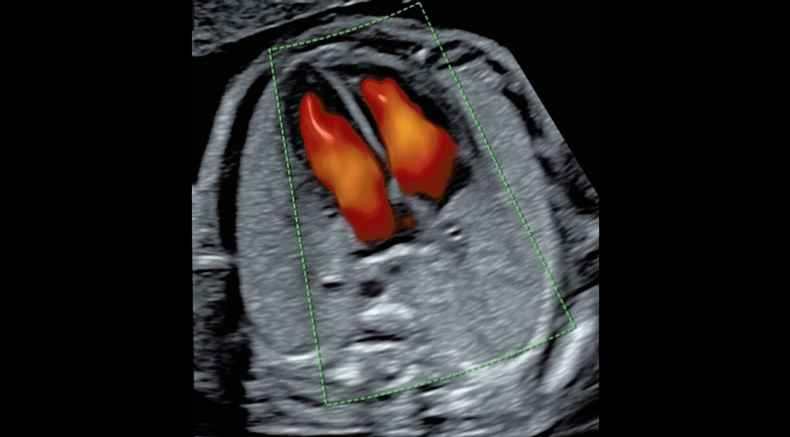
Ultrasound image of the four-chamber view with colour Doppler showing two separate blood inflows into the ventricles during diastole
Carvalho, J.S., Axt-Fliedner, R., Chaoui, R., Copel, J.A., Cuneo, B.F., Goff, D., Gordin Kopylov, L., Hecher, K., Lee, W., Moon-Grady, A.J., Mousa, H.A., Munoz, H., Paladini, D., Prefumo, F., Quarello, E., Rychik, J., Tutschek, B., Wiechec, M. and Yagel, S. (2023)
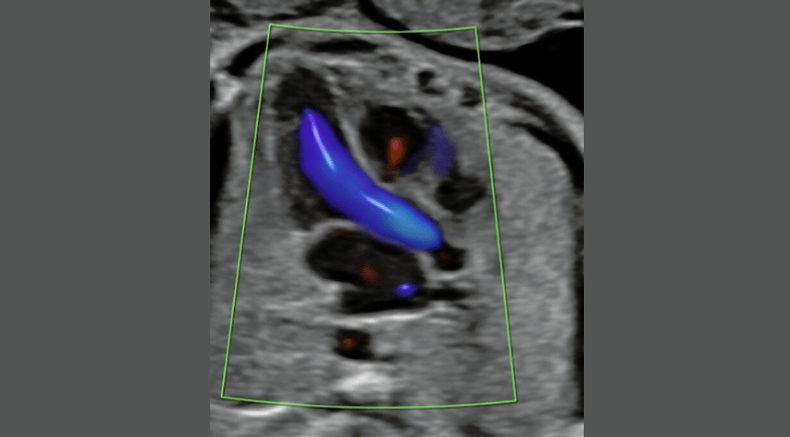
Ultrasound image of left ventricular outflow-tract view obtained from apical approach. Colour Doppler imaging during systole demonstrates laminar flow across Ao and along septoaortic continuity
Carvalho, J.S., Axt-Fliedner, R., Chaoui, R., Copel, J.A., Cuneo, B.F., Goff, D., Gordin Kopylov, L., Hecher, K., Lee, W., Moon-Grady, A.J., Mousa, H.A., Munoz, H., Paladini, D., Prefumo, F., Quarello, E., Rychik, J., Tutschek, B., Wiechec, M. and Yagel, S. (2023)
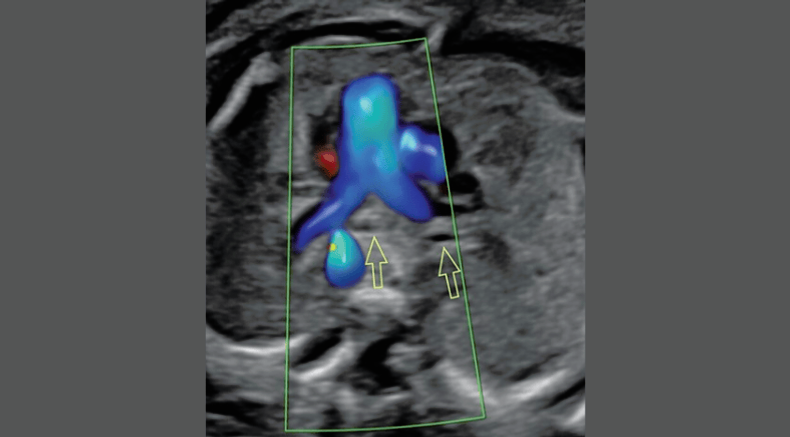
Ultrasound image of right ventricular outflow-tract view, colour Doppler demonstrates main MPA during systole, with its bifurcation into LPA and RPA
Carvalho, J.S., Axt-Fliedner, R., Chaoui, R., Copel, J.A., Cuneo, B.F., Goff, D., Gordin Kopylov, L., Hecher, K., Lee, W., Moon-Grady, A.J., Mousa, H.A., Munoz, H., Paladini, D., Prefumo, F., Quarello, E., Rychik, J., Tutschek, B., Wiechec, M. and Yagel, S. (2023)
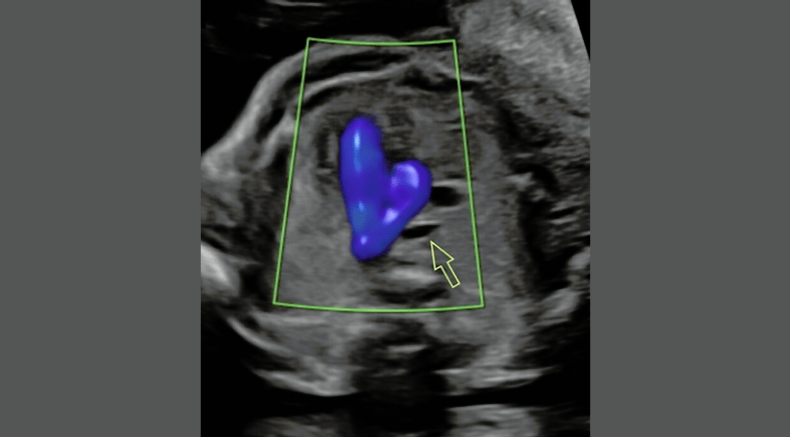
Ultrasound image of three-vessel-and-trachea view, colour Doppler during systole demonstrates antegrade flow in ductal arch and Ao
Carvalho, J.S., Axt-Fliedner, R., Chaoui, R., Copel, J.A., Cuneo, B.F., Goff, D., Gordin Kopylov, L., Hecher, K., Lee, W., Moon-Grady, A.J., Mousa, H.A., Munoz, H., Paladini, D., Prefumo, F., Quarello, E., Rychik, J., Tutschek, B., Wiechec, M. and Yagel, S. (2023)
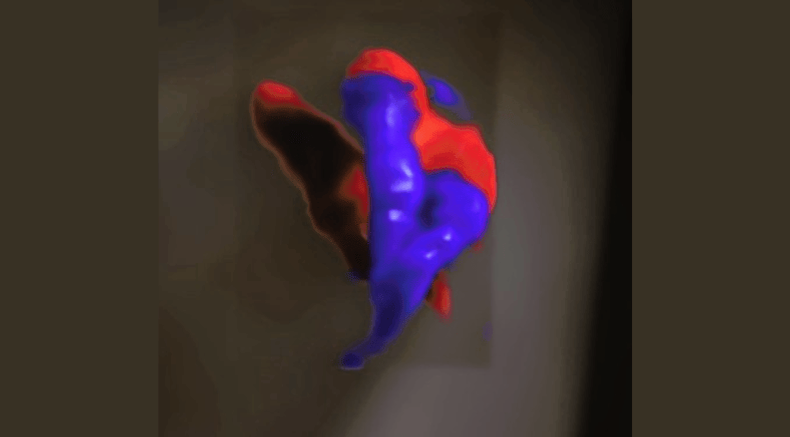
3D/4D rendering of intracardiac flow using spatiotemporal image correlation (STIC)
Chaoui, R. (2021), Evolution of fetal cardiac imaging in 30 years of ISUOG. Ultrasound Obstet Gynecol, 57: 38-42. https://doi.org/10.1002/uog.23551
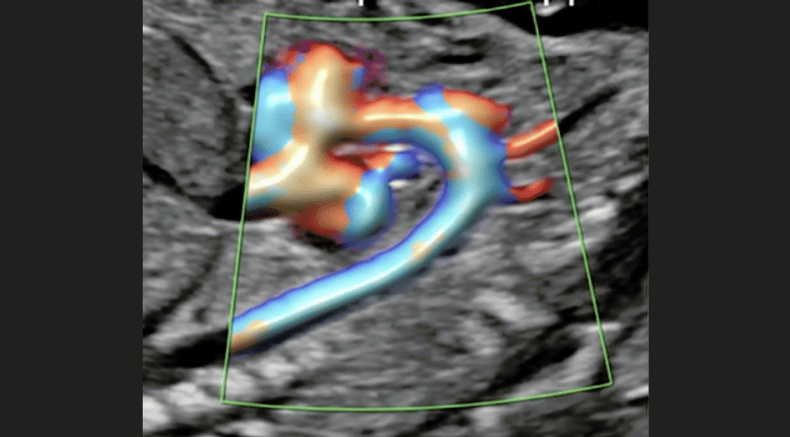
Fetal heart Aortic arch displayed using bidirectional sensitive power Doppler
Chaoui, R. (2021), Evolution of fetal cardiac imaging in 30 years of ISUOG. Ultrasound Obstet Gynecol, 57: 38-42. https://doi.org/10.1002/uog.23551
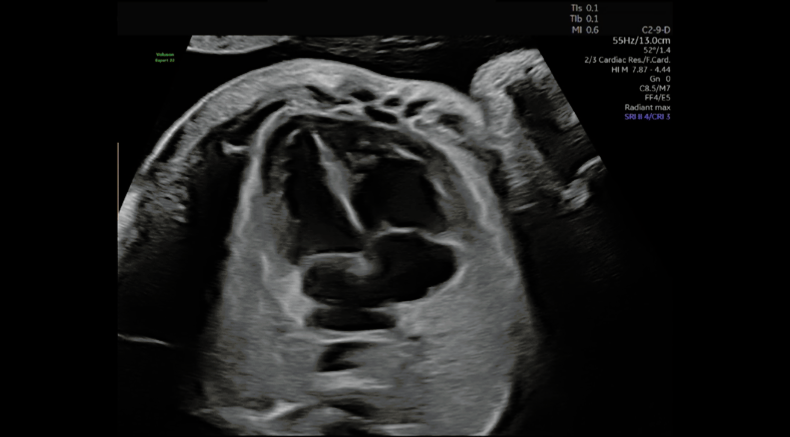
Four chamber heart view
Abu-Rustum, R. (2025, September 14-17th). The fundamental four chamber view: what you might see and what you might miss [Workshop]. 2025 ISUOG World Congress, Cancun, Mexico.
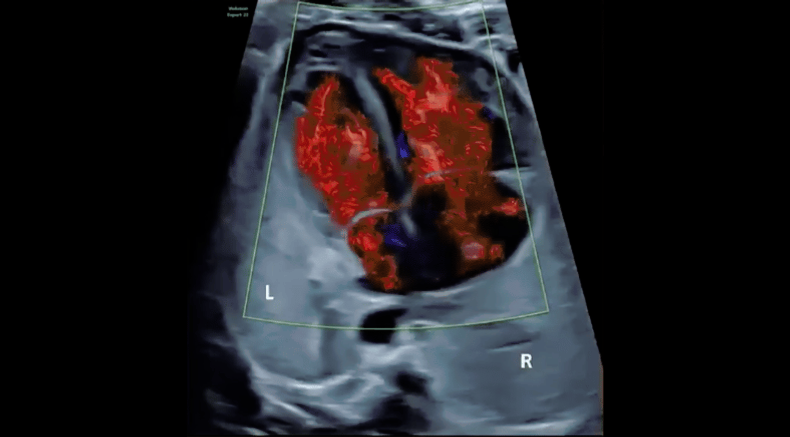
Apical four chamber heart view with colour doppler during diastole
Abu-Rustum, R. (2025, September 14-17th). The fundamental four chamber view: what you might see and what you might miss [Workshop]. 2025 ISUOG World Congress, Cancun, Mexico.
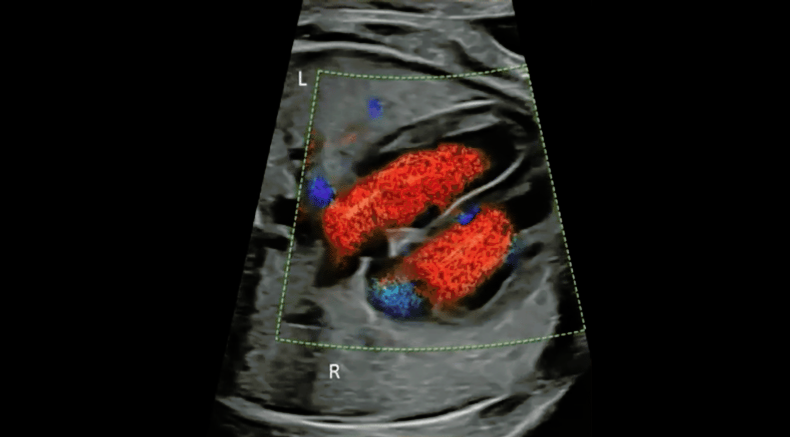
Four chamber view of the fetal heart with colour doppler during diastole
Abu-Rustum, R. (2025, September 14-17th). The fundamental four chamber view: what you might see and what you might miss [Workshop]. 2025 ISUOG World Congress, Cancun, Mexico.
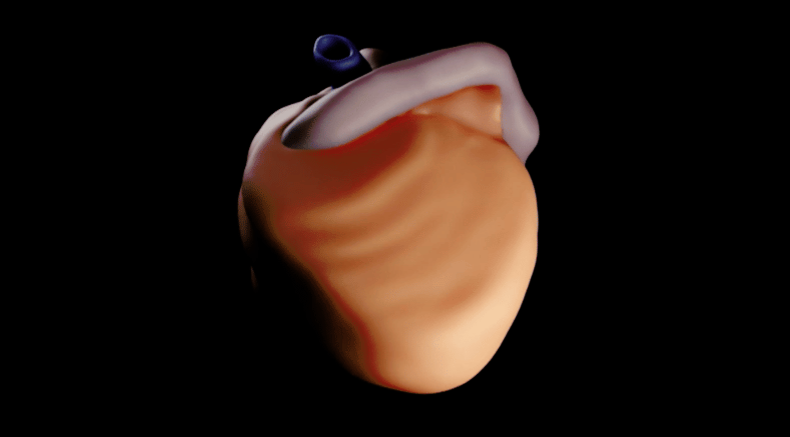
Virtual rendering of fetal heart with transposition of the great arteries with cardiac structures segmented by colour for the purpose of virtual navigation
Leite, M.d.F.P., Bravo-Valenzuela, N.J., Araujo Júnior, E., Ribeiro, G., Arcoverde, V. and Werner, H. (2025), Transposition of the great arteries: three-dimensional virtual navigation inside the fetal heart. Ultrasound Obstet Gynecol, 66: 669-671.
Why is fetal anomalies: heart a key topic at ISUOG 2026?
Sessions where you can learn more about this topic at ISUOG 2026 World Congress
Supplement your learning before Congress
Recent UOG articles
- Indications for fetal echocardiography: also a need to define the examination and standards of practice - T. V. Vigneswaran, V. Jowett, R. Akolekar, J. M. Simpson. First published: 06 December 2025
- Reply: Indications for fetal echocardiography - V. De Robertis, T. Stampalija, A. Z. Abuhamad, M. Bosco, R. Chaoui, C. Formigoni, A. J. Moon-Grady, D. Paladini, G. Pilu, I. G. Ramezzana, J. Rychik, P. Volpe. First published: 06 December 2025
- Prenatal detection and outcome of major heart defects in a country with universal screening - C. Vedel, J. Steensberg, O. B. Petersen, H. Andersen, M. Barbosa, M. Christiansen, V. Gjørup, A. N. Jensen, K. Munk, K. Nyborg, A. W. Olesen, F. Ravn, L. Sperling, H. G. H. Thyregod, N. Vejlstrup, C. K. Ekelund. First published: 21 October 2025
- Transposition of the great arteries: three-dimensional virtual navigation inside the fetal heart - M. d. F. Pereira Leite, N. J. Bravo-Valenzuela, E. Araujo Júnior, G. Ribeiro, V. Arcoverde, H. Werner. First published: 03 September 2025
- Re: Indications for fetal echocardiography: consensus and controversies among evidence-based national and international guidelines - M. Robalo Cordeiro, M. Branco. First published: 14 October 2025
- Reply: Indications for fetal echocardiography: consensus and controversies - V. De Robertis, T. Stampalija, A. Z. Abuhamad, M. Bosco, R. Chaoui, C. Formigoni, A. J. Moon-Grady, D. Paladini, G. Pilu, I. G. Ramezzana, J. Rychik, P. Volpe. First published: 14 October 2025
- Thoughts on the contribution of artificial intelligence (AI) to assessment of the fetal heart: a true scientific odyssey - E. Quarello, E. Corno. First published: 25 February 2025
- Indications for fetal echocardiography: consensus and controversies among evidence-based national and international guidelines - V. De Robertis, T. Stampalija, A. Z. Abuhamad, M. Bosco, R. Chaoui, C. Formigoni, A. J. Moon-Grady, D. Paladini, G. Pilu, I. G. Ramezzana, J. Rychik, P. Volpe. First published: 10 April 2025
UOG videos

UOG Videoclip: Connecting prenatal ultrasound characteristics with postnatal findings in a case of PHACE syndrome
UOG Videoclip: Transposition of the great arteries: three-dimensional virtual navigation inside the fetal heart
UOG Videoclip: Abnormal flow patterns in ascending aorta in fetuses with tetralogy of Fallot
UOG Videoclip: Evaluation of first-trimester ultrasound screening strategy for fetal congenital heart disease
Lectures
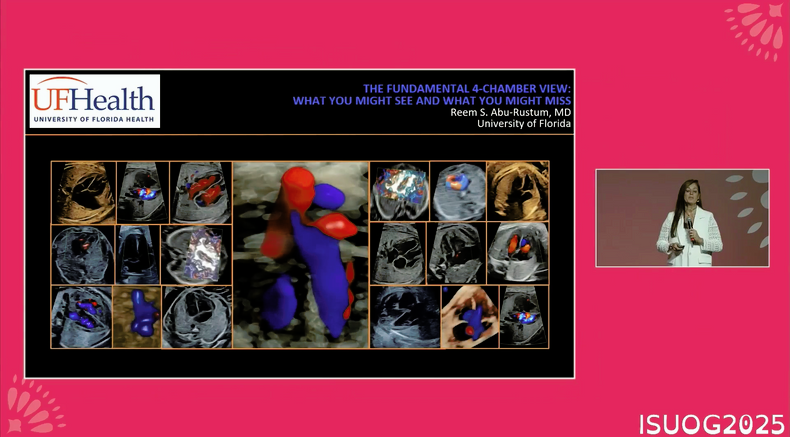
The fundamental 4 chamber view
R. Abu Rustem 2025
Novel Doppler imaging and cardiac assessment
F. Crispi 2025
Heart imaging in the first trimester
R. Chaoui 2024
Don’t skip a beat: fetal heart in 2023
J. Carvalho 2023
ISUOG guideline
VISUOG
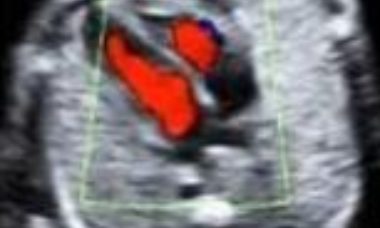
Abnormal 4-chamber view
Explore chapters on the abnormal 4 chamber view.
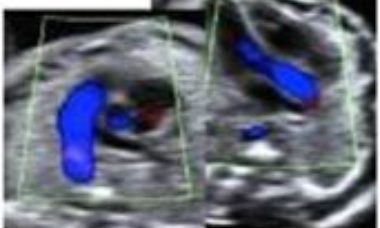
Abnormal outflow tracts
Explore chapters on aortic stenosis, common arterial trunk, fallots & variants, TGA, c-TGA, and pulmonary stenosis.
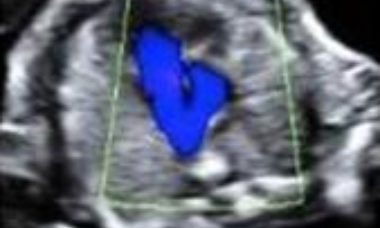
Abnormal 3-vessels view
Explore chapters on persistent left superior vena cava, aberrant right subclavian artery, double aortic arch and right aortic arch.
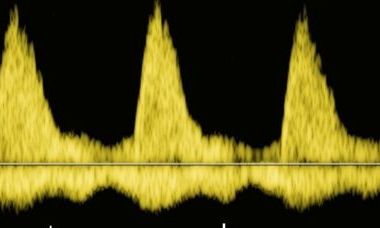
Abnormal Rate and Rhythm
Explore chapters on abnormal rate and rhythm, fetal tachycardia and fetal bradycardia.
VISUOG Case
Patient information
Hypoplastic Left Heart Syndrome (HLHS)
This leaflet is to help you understand what Hypoplastic Left Heart Syndrome (HLHS) is, what causes it, and the implications of being diagnosed for you, your baby, and your family.
Transposition of the Great Arteries (TGA)
This leaflet is to help you understand TGA and what questions you need to ask your doctor.
Coarctation of the aorta
This leaflet is to help you understand what Coarctation of the aorta is, what tests you need and the implication of being diagnosed with Coarctation of the aorta for your baby and your family.
Total Anomalous Pulmonary Venous Return (TAPVR)
This leaflet is to help you understand what total anomalous pulmonary venous return (TAPVR) is and what causes it, what tests you need, and the implications of being diagnosed for your baby once it is born.
Ebstein’s anomaly
This leaflet is to help you understand what Ebstein’s anomaly is, what tests you need, and the implication of being diagnosed for your baby and your family.
Common Arterial Trunk
This leaflet is to help you understand what Common Arterial Trunk is, what tests you need and the implication of having been diagnosed with Common Arterial Trunk for you, your baby and your family.
CME activities
- CME: Expert screening of the fetal heart
- CME: Septal defects of the fetal heart
- CME: Irregular fetal heart rhythm: evaluation and management
- CME: Outflow Tracts
- CME Activity: Workshop - Commonly Missed Cardiac Anomalies
- CME Activity: Cardiac Ultrasound: The Heart of the Matter
Key questions
What are the optimal ultrasound imaging protocols in the first, second and third trimesters for accurate detection of congenital heart disease?
How can standardised cardiac views be optimised using Doppler to improve detection rates across varying levels of operator experience?
Which sonographic findings should trigger referral for fetal echocardiography or additional imaging?
Why do expert recommendations differ on indications for fetal echocardiography, and how should clinicians navigate areas of consensus versus controversy in daily practice?