

Discover the latest updates to fetal therapy and interventions from world-leading experts in London this September.
Maternal-fetal medicine has seen rapid advancements and improved perinatal outcomes as a result of fetal therapy and interventional procedures. Ultrasound-guided and fetoscopic procedures are increasingly improving survival and long-term outcomes for conditions such as twin-to-twin transfusion syndrome (TTTS), fetal anemia, congenital thoracic lesions, spina bifida and complex congenital heart disease. As fetal medicine evolves, ultrasound imaging remains central to early diagnosis, risk stratification, procedural guidance and post-treatment surveillance.
Through scientific sessions, live demonstrations and multidisciplinary discussions at this year's ISUOG World Congress in London, attendees will learn firsthand about the research that informs emerging fetoscopic procedures, ultrasound-guided interventions, and advanced prenatal imaging. As fetal therapy continues to reshape prenatal care, the Congress will provide an essential forum for translating the latest UOG research into clinical practice that can alter outcomes and improve lives.
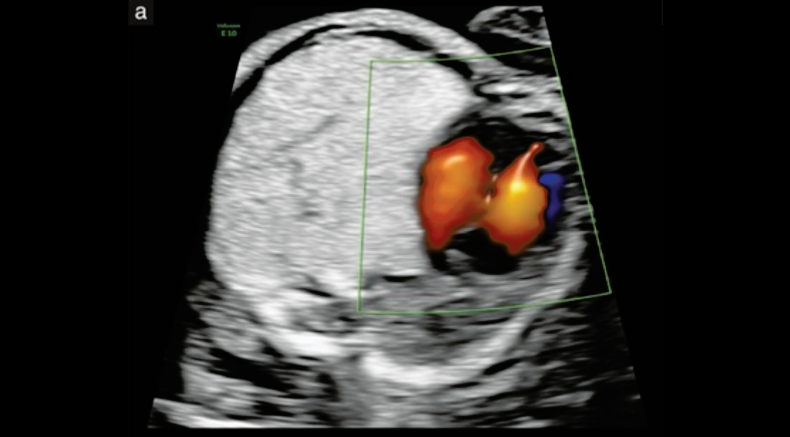
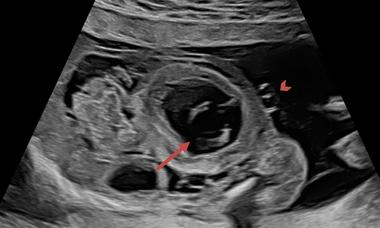
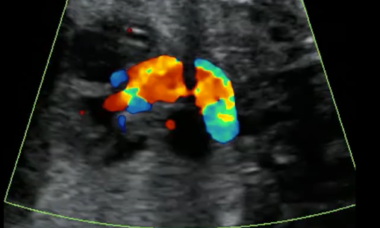
Transabdominal ultrasound imaging of fetal thorax at 28 weeks' gestation at the level of the four-chamber view
Cruz-Martínez, R., Cisneros-Martínez, A., Rodriguez-García, J.L., Peláez-Jiménez, A. and Gil-Pugliese, S. (2026), Full laser ablation of feeding artery in non- hydropic fetuses with large bronchopulmonary sequestration and mediastinal shift. Ultrasound Obstet Gynecol, 67: 692-694
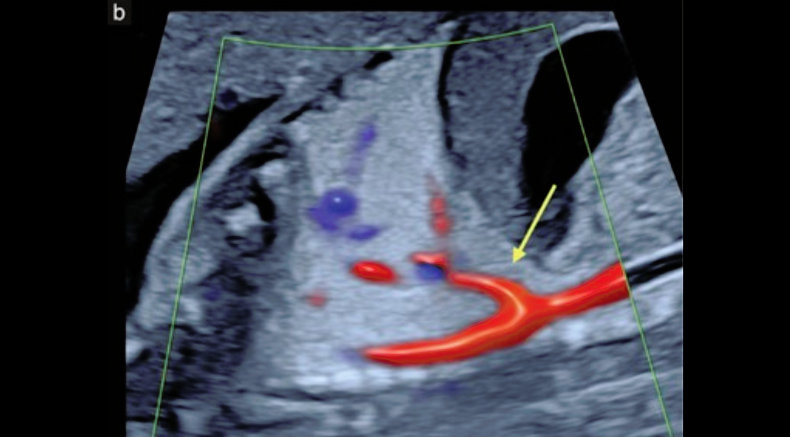
Transabdominal color Doppler ultrasound imaging of fetal thorax at 28 weeks' gestation in sagittal view
Cruz-Martínez, R., Cisneros-Martínez, A., Rodriguez-García, J.L., Peláez-Jiménez, A. and Gil-Pugliese, S. (2026), Full laser ablation of feeding artery in non- hydropic fetuses with large bronchopulmonary sequestration and mediastinal shift. Ultrasound Obstet Gynecol, 67: 692-694
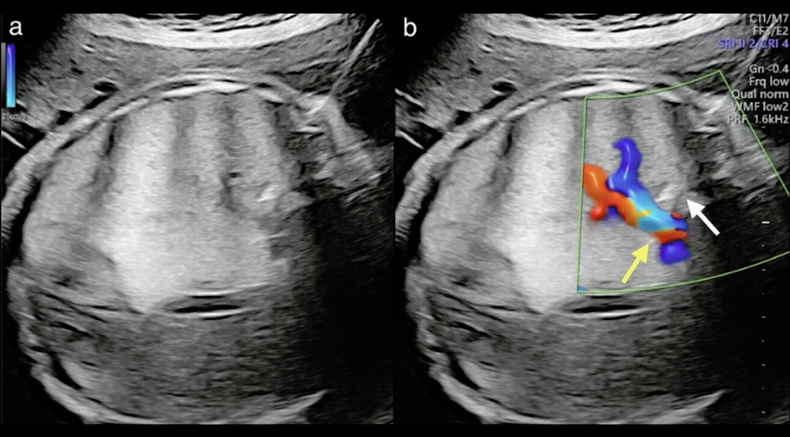
Transabdominal ultrasound imaging (dual mode with simultaneous two-dimensional and color Doppler) of fetal thorax at 28 weeks' gestation in axial view
Cruz-Martínez, R., Cisneros-Martínez, A., Rodriguez-García, J.L., Peláez-Jiménez, A. and Gil-Pugliese, S. (2026), Full laser ablation of feeding artery in non- hydropic fetuses with large bronchopulmonary sequestration and mediastinal shift. Ultrasound Obstet Gynecol, 67: 692-694. https://doi.org/10
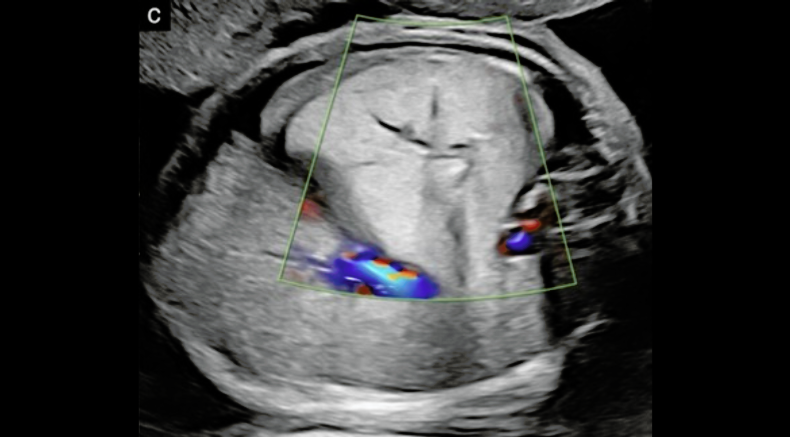
After full laser ablation of feeding artery, complete disruption of blood flow to the lung mass is noted
Cruz-Martínez, R., Cisneros-Martínez, A., Rodriguez-García, J.L., Peláez-Jiménez, A. and Gil-Pugliese, S. (2026), Full laser ablation of feeding artery in non- hydropic fetuses with large bronchopulmonary sequestration and mediastinal shift. Ultrasound Obstet Gynecol, 67: 692-694
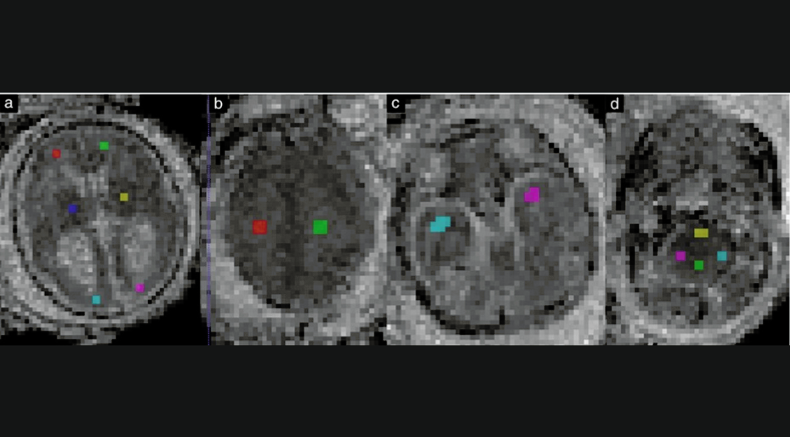
Regions of interest for measurement of apparent diffusion coefficient values on diffusion-weighted magnetic resonance imaging
Corroenne, R., Huisman, T.A.G.M., Whitehead, W.E., Nassr, A.A., Munoz, J.L., Castillo, J., Castillo, H., Johnson, R.M., Donepudi, R.V., Belfort, M.A. and Sanz-Cortes, M. (2026), Association between fetal brain diffusion-weighted imaging and postnatal neurodevelopmental
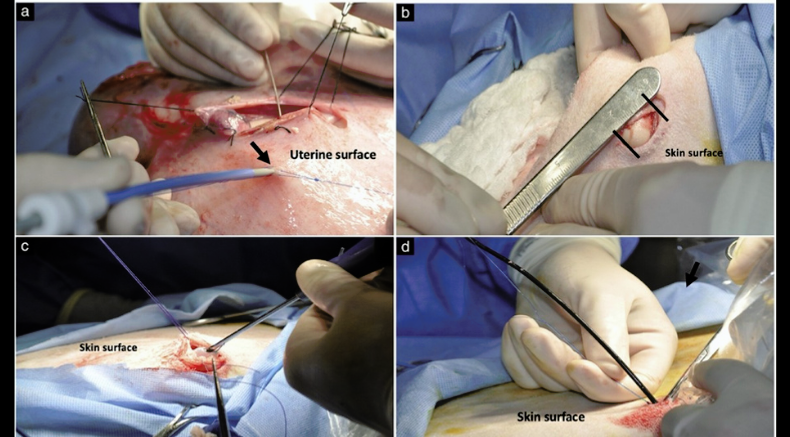
Photographs of different entry methods taken during surgery of pregnant ewes
Krispin, E., Qaderi, S., Javinani, A., Zargarzadeh, N., Ville, Y., Chmait, R.H., Forde, B., Peiro, J.L., Carreon, C.K., Aagaard, K.M. and Shamshirsaz, A.A. (2025), Feasibility and efficacy of vascular closure device for sealing uterine entry site. Ultrasound Obstet Gynecol, 66: 462-469.
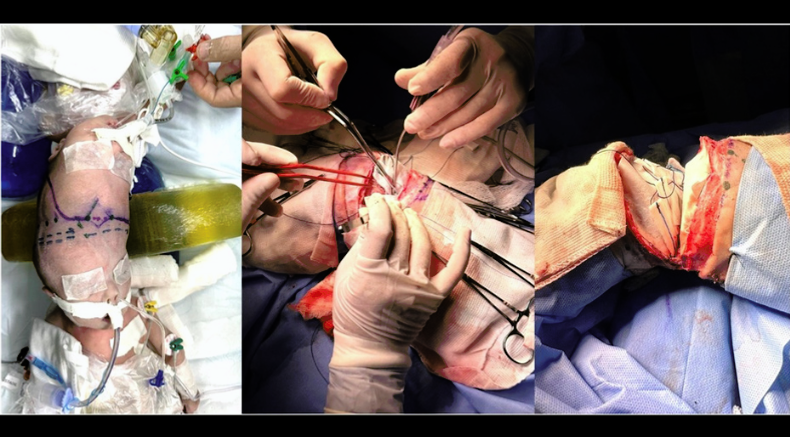
Postnatal and intraoperative findings during separation of craniopagus twins
Castro, P.T., Lopes, J., Fazecas, T., Ribeiro, G., Mufarrej, G., Jeelani, O. and Werner, H. (2026), First-trimester three-dimensional ultrasound for craniopagus twin anatomy: value in multidisciplinary discussions and parental counseling. Ultrasound Obstet Gynecol, 67: 407-410.
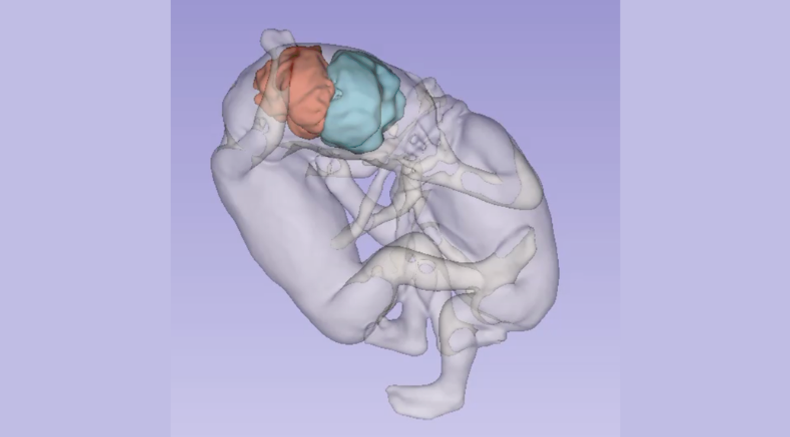
Three-dimensional magnetic resonance imaging reconstruction of craniopagus twins postnatally, demonstrating cerebral distortions comparable to those observed at 13 weeks' gestation
Castro, P.T., Lopes, J., Fazecas, T., Ribeiro, G., Mufarrej, G., Jeelani, O. and Werner, H. (2026), First-trimester three-dimensional ultrasound for craniopagus twin anatomy: value in multidisciplinary discussions and parental counseling. Ultrasound Obstet Gynecol, 67: 407-410.
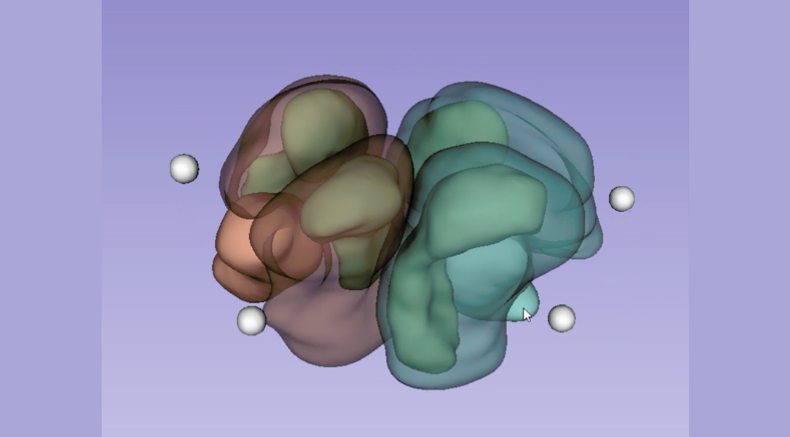
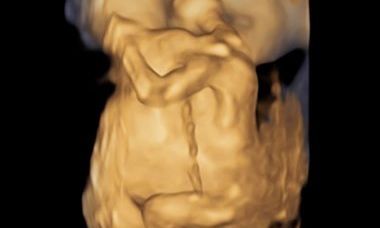
Three-dimensional volumetric reconstruction of craniopagus twins at 13 weeks' gestation
Castro, P.T., Lopes, J., Fazecas, T., Ribeiro, G., Mufarrej, G., Jeelani, O. and Werner, H. (2026), First-trimester three-dimensional ultrasound for craniopagus twin anatomy: value in multidisciplinary discussions and parental counseling. Ultrasound Obstet Gynecol, 67: 407-410.
Sessions where you can learn more about this topic at ISUOG 2026 World Congress
Supplement your learning before Congress
Recent UOG Articles
- Perinatal outcomes of twin pregnancies complicated by early twin-to-twin transfusion syndrome treated with fetoscopic laser surgery - F. G. Sileo, A. Khalil, J. Binder, E. Brunelli, N. Chianchiano, C. M. Coutinho, F. D'Antonio, M. Döbert, A. Fichera, Y. Gielchinsky, K. Hecher, C. Iacovella, S. Malone, A. Martinez-Varea, L. N. Nørgaard, C. Rodo, T. Simões, F. Slaghekke, Y. Yinon, Collaborators. First published: 30 March 2026
- Full laser ablation of feeding artery in non- hydropic fetuses with large bronchopulmonary sequestration and mediastinal shift - R. Cruz-Martínez, A. Cisneros-Martínez, J. L. Rodriguez-García, A. Peláez-Jiménez, S. Gil-Pugliese. First published: 28 March 2026
- Role of predelivery fetal echocardiography, cardiac magnetic resonance imaging and acute maternal hyperoxygenation in predicting urgency of neonatal balloon atrial septostomy in fetal d-transposition of the great arteries - E. Jaeggi, L. Sun, M. Saito, A. Szabo, N. Arbic, B. Mueller, M. Seed. First published: 05 March 2026
- Prediction of survival after fetoscopic laser surgery for early-onset twin-to-twin transfusion syndrome - S. Prasad, F. G. Sileo, J. Binder, E. Brunelli, N. Chianchiano, C. M. Coutinho, F. D'Antonio, M. Döbert, A. Fichera, Y. Gielchinsky, K. Hecher, C. Iacovella, S. Malone, A. Martinez-Varea, L. N. Nørgaard, C. Rodo, T. Simões, F. Slaghekke, Y. Yinon, A. Khalil. First published: 15 February 2026
- Fetoscopic laser ablation vs standard management for Type-II and Type-III vasa previa - S. Backley, R. H. Chmait, E. P. Bergh, N. Agarwal, A. Llanes, G. Hamadeh, E. Hernandez-Andrade, A. Johnson, J. Espinoza, A. Salazar, S. Zhu, R. Papanna. First published: 05 February 2026
- Perinatal outcomes following in-utero transfusion for hydrops fetalis associated with parvovirus B19 infection - M. Parent, P. Maurice, E. Van den Eede, J. Mattern, M. Sanchez, L. Paret, G. Dumery, D. Badr, R. Devlieger, P. Calda, T. Quibel, C. Vauloup-Fellous, A. Benachi, J.-M. Jouannic, A. J. Vivanti. First published: 02 February 2026
- Association between fetal brain diffusion-weighted imaging and postnatal neurodevelopmental outcome after prenatal myelomeningocele repair - R. Corroenne, T. A. G. M. Huisman, W. E. Whitehead, A. A. Nassr, J. L. Munoz, J. Castillo, H. Castillo, R. M. Johnson, R. V. Donepudi, M. A. Belfort, M. Sanz-Cortes. First published: 25 January 2026
- Fetoscopic two-layer closure for open neural tube defects: prospective study of obstetric, surgical and perinatal outcomes in the first 50 cases - C. Giné, S. Arévalo, N. Maiz, C. Rodó, E. Moreno, B. Casas, S. Manrique, M. Meléndez, M. López, E. Carreras. First published: 03 September 2025
UOG videos

First-trimester three-dimensional ultrasound for craniopagus twin anatomy
Current challenges in intrauterine management of obstructive fetal hydrocephalus and future directions
Feasibility and efficacy of vascular closure device for sealing uterine entry site
Double-needle intrauterine transfusion technique for early severe fetal anemia resulting from parvovirus B19
Prenatal intervention in vein of Galen aneurysmal malformation
Standardized approach to ultrasound-guided balloon puncture for reversal of tracheal occlusion
Intrapericardial congenital diaphragmatic hernia: three-dimensional reconstruction
Bronchopulmonary sequestration treated successfully with prenatal radiofrequency ablation of feeding artery
Lectures
New topics in fetal surgery
R. Cruz-Martinez 2025
Hydrocephalus in spina bifida: outcomes after intrauterine intervention
M. Sanz-Cortes 2025
Trial of Laser surgery for TTTS
R. Chmait 2025
Ultrasound Guided laser ablation of the feeding artery in non-hydropic fetuses with large bronchopulmonary sequestration
R Cruz-Martinez 2024
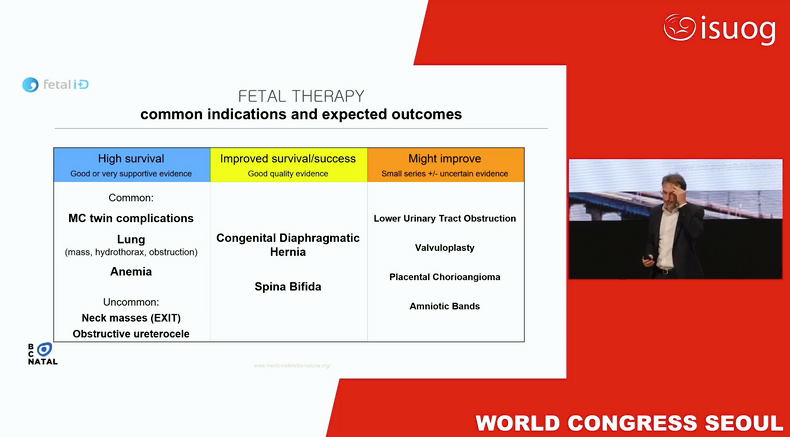
How to select a candidate for FETO when a fetus is diagnosed with congenital diaphragmatic hernia
E.Gratacos 2023
Identifying the ideal candidate for in-utero treatment of an aneurism of the vein of Galen
J Stirnemann 2023
VISUOG
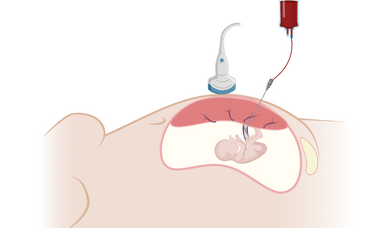
General Principles of Ultrasound-Guided Procedures
In utero ultrasound-guided procedures have revolutionized antenatal care by enabling diagnosis, management, and treatment of various fetal conditions within the mother's womb using real-time ultrasound imaging.
Ultrasound-Guided Fetal Surgeries: Techniques and Applications
Ultrasound-guided fetal surgeries have transformed prenatal care by offering effective therapeutic options for several major fetal conditions during pregnancy. This overview aims to underline the significance of ultrasound-guided fetal surgeries, their techniques, applications, benefits, and challenges.
Spina Bifida
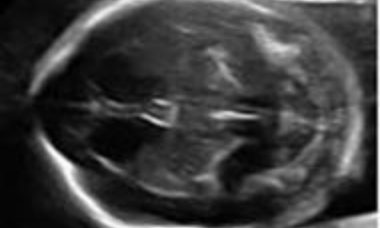
Spina bifida is a defect of the vertebral arches. Most frequently the cavity of the neural tube is open. In a minority of cases the defect is closed by the overlying skin. Open spina bifida results in a U-shaped defect of the vertebrae in the axial plane, and is associated with typical cranial signs and clubfoot.
Enlargement of the vein of Galen
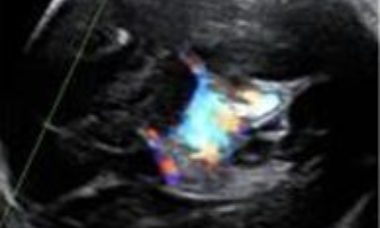
It is the consequence of two types of arteriovenous malformation: the vein of Galen aneurysmal malformation and the pial arteriovenous malformation. The sonographic appearance is similar and the most prominent finding is the enlargement of the vein of Galen, that on Color Doppler contains turbulent blood flow.
Diaphragmatic Hernia
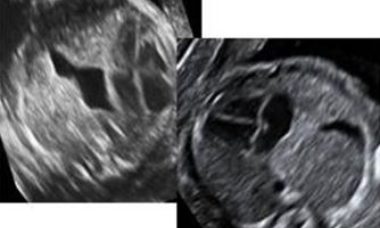
Congenital diaphragmatic hernia is a fetal defect associated with a higher risk of mortality due to pulmonary hypertension and lung hypoplasia. Fetal diagnosis is based on demonstration of an abnormality in the thoracic view. Prognosis is based on evaluation of the lung size in the contralateral side of the hernia.
Aortic Stenosis
Aortic Stenosis (AS) is the narrowing of the aortic valve opening, causing a variable degree of left outflow tract obstruction. The underlying pathophysiology is left outflow tract obstruction. The degree of obstruction varies from mild to severe, from an asymptomatic bicuspid valve to critical obstruction.
Conjoined Twins
Conjoined twins are a rare complication of monochorionic monoamniotic twin pregnancies, (1% of cases. when the twin fetuses are fused together at the same anatomical site and share body part(s). The current classification is based on the anatomical site of fusion.
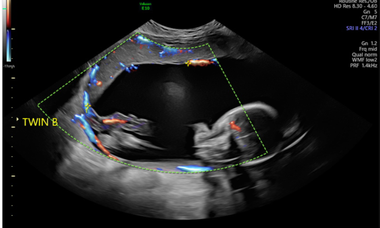
Twin-Twin Transfusion Syndrome
Twin-Twin Transfusion Syndrome (TTTS) is a potentially fetal life-threatening complication that occurs in about 9-15% of identical twin pregnancies that share a placenta (monochorionic).
Patient Information
Aortic Stenosis
Aortic Stenosis (AS) is the narrowing of the aortic valve opening, causing a variable degree of left outflow tract obstruction. The underlying pathophysiology is left outflow tract obstruction. The degree of obstruction varies from mild to severe, from an asymptomatic bicuspid valve to critical obstruction.
Spina Bifida
Spina bifida is a defect of the vertebral arches. Most frequently the cavity of the neural tube is open. In a minority of cases the defect is closed by the overlying skin. Open spina bifida results in a U-shaped defect of the vertebrae in the axial plane, and is associated with typical cranial signs and clubfoot.
Congenital Diaphraghmatic Hernia (CDH)
This leaflet is to help you understand what Congenital Diaphraghmatic Hernia (CDH) is, what tests you need, and the implication of having been diagnosed with Congenital Diaphraghmatic Hernia (CDH) for your baby and your family.
Enlargement of the Vein of Galen
This leaflet is to help you understand what Enlargement of the Vein of Galen is, what tests you need, and the implication of having been diagnosed with Enlargement of the Vein of Galen for you, your baby and your family.
Conjoined Twins
This leaflet is to help you understand more about Conjoined Twins.
Ultrasound-Guided Fetal Procedures: A Guide for Patients
This leaflet is to help you understand Ultrasound-Guided Fetal Procedures.
CME activities
- CME Activity: Fetoscopic Laser Coagulation in 1020 Pregnancies with Twin–Twin Transfusion Syndrome Demonstrates Improvement in Double-Twin Survival Rate
- CME Activity: Twin Reversed Arterial Perfusion (TRAP) Sequence
Key questions
What innovations in ultrasound technology, simulation training and artificial intelligence are likely to transform the future of fetal interventions?
What are the latest advances in fetoscopic techniques for the treatment of complications in monochorionic twins?
How is ultrasound enabling fetal interventions, such as laser ablation for vasa previa or bronchopulmonary sequestration in selected cases?
What are the current outcomes and challenges facing fetoscopic repair of open neural tube defects?
How should long-term neurodevelopmental outcomes be incorporated into the evaluation of success following fetal therapy and prenatal surgery?